ARTICLE
Understanding Gen Z in the Workplace

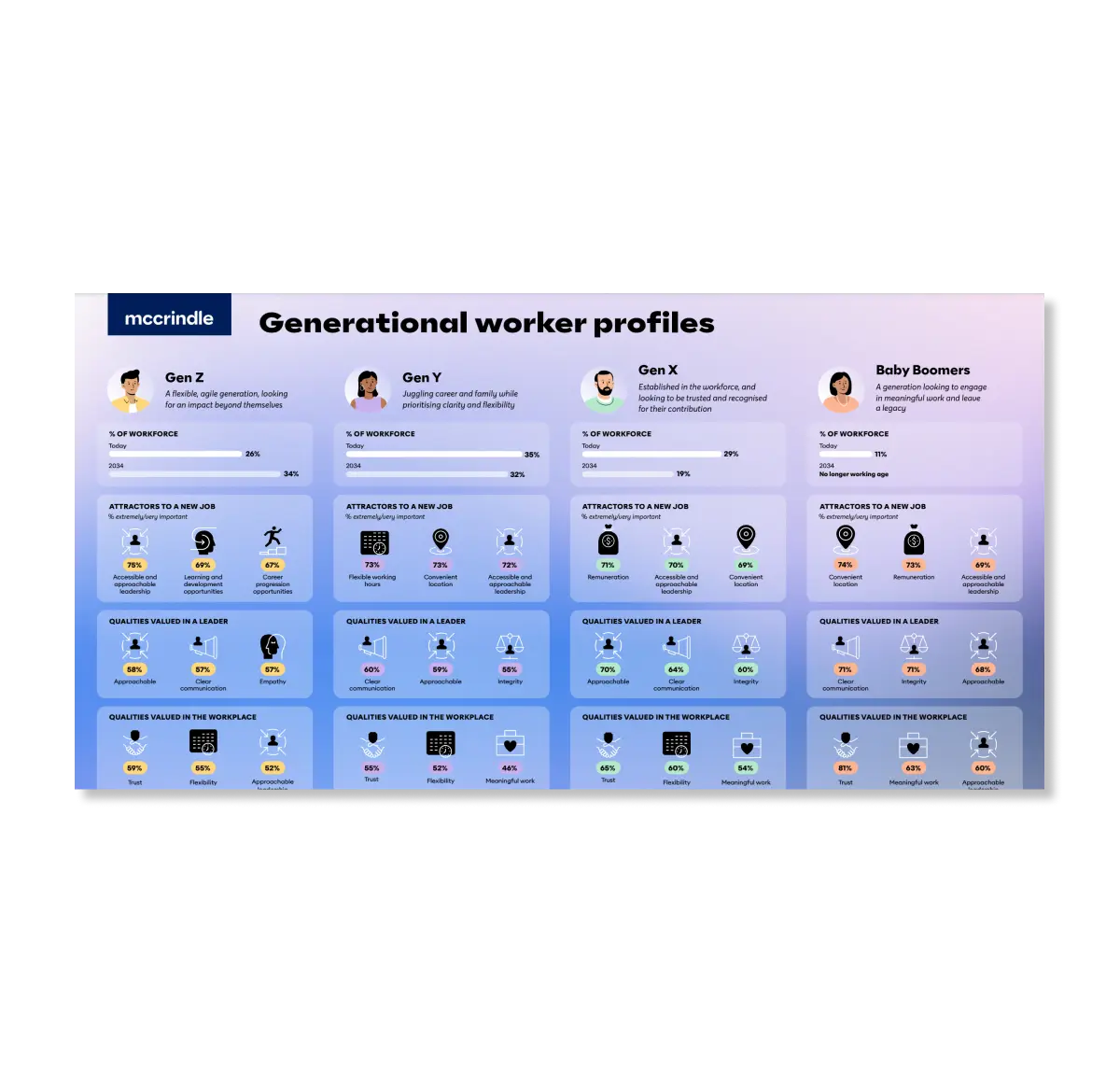
As the landscape of work continues to evolve, understanding the nuances of each generation becomes critical for effective leadership and successful team dynamics. Generation Z, those currently in their late teens and twenties, already make up over a quarter of the global workforce. Despite their growing presence, many employers still grapple with attracting, engaging, and retaining these young professionals. Understanding the unique characteristics and expectations of Gen Z is essential for leaders looking to foster a thriving, multigenerational workforce.
Who is Gen Z?
Gen Z represents a digitally integrated generation that has grown up in an era saturated with social media and technology. They are known for being independent, determined, and creative. These qualities are crucial as they navigate a career landscape predicted to involve 18 different jobs across six industries. Their formative years in a rapidly changing world have shaped their perspectives and expectations from work environments.
Engaging Gen Z: The Importance of Leadership and Culture
For Gen Z, traditional workplace values like loyalty have been redefined. Rather than settling into a long-term role out of obligation, they seek careers offering personal growth and development. One of their most significant expectations is access to leadership and mentorship. They want to work in environments where leadership is not only present but also approachable and empathetic. This generation values feedback and recognition, with 54% preferring to receive praise multiple times a week.
Further, the culture within an organisation significantly impacts Gen Z’s workplace satisfaction. They appreciate environments that prioritize trust, flexibility, and a fun, engaging atmosphere. Leaders can no longer use traditional methods of engagement; instead, they must adapt by offering visually-based content for training and onboarding, aligning with Gen Z’s preference for video and micro-content learning.
Aligning Purpose and Work
Purpose plays an integral role in Gen Z’s career decisions. They seek meaningful work that aligns with their personal values and world views. This societal calling extends beyond just tasks and into the cultural and ethical framework of the workplace. Organisations that provide Gen Z employees with a sense of purpose and community are more likely to retain their talents. They are not simply seeking jobs; they are looking for positions where they can make an impact and feel part of something larger.
Preparing for the Future
As Gen Z moves closer to pivotal life stages, such as family formation, their work priorities may shift. Understanding these potential changes allows leaders to adapt strategies to maintain engagement and retention. Employers can focus on providing stability while still offering development opportunities. Establishing a workplace culture that encourages growth and supports both professional and personal development can help Gen Z employees feel valued and invested in their work.
Creating a thriving work environment means acknowledging the distinct differences each generation brings and fostering a culture that leverages these differences for overall success. In doing so, leaders not only benefit from the innovative potential of younger employees but also ensure that the workforce remains dynamic and competitive. The future of work depends on understanding and evolving with these generational shifts, building organizations that prioritise collective growth and individual fulfillment.