ARTICLE
The future education workforce

Education is the cornerstone of our society and shapes the future for every child. Faced with an ageing workforce, a growing student population, and a declining pipeline of new graduates, many schools fine themselves with a shortage of teachers. This isn’t just a problem of filling teaching roles today, but also presents the challenge of filling future leadership roles.
An ageing workforce
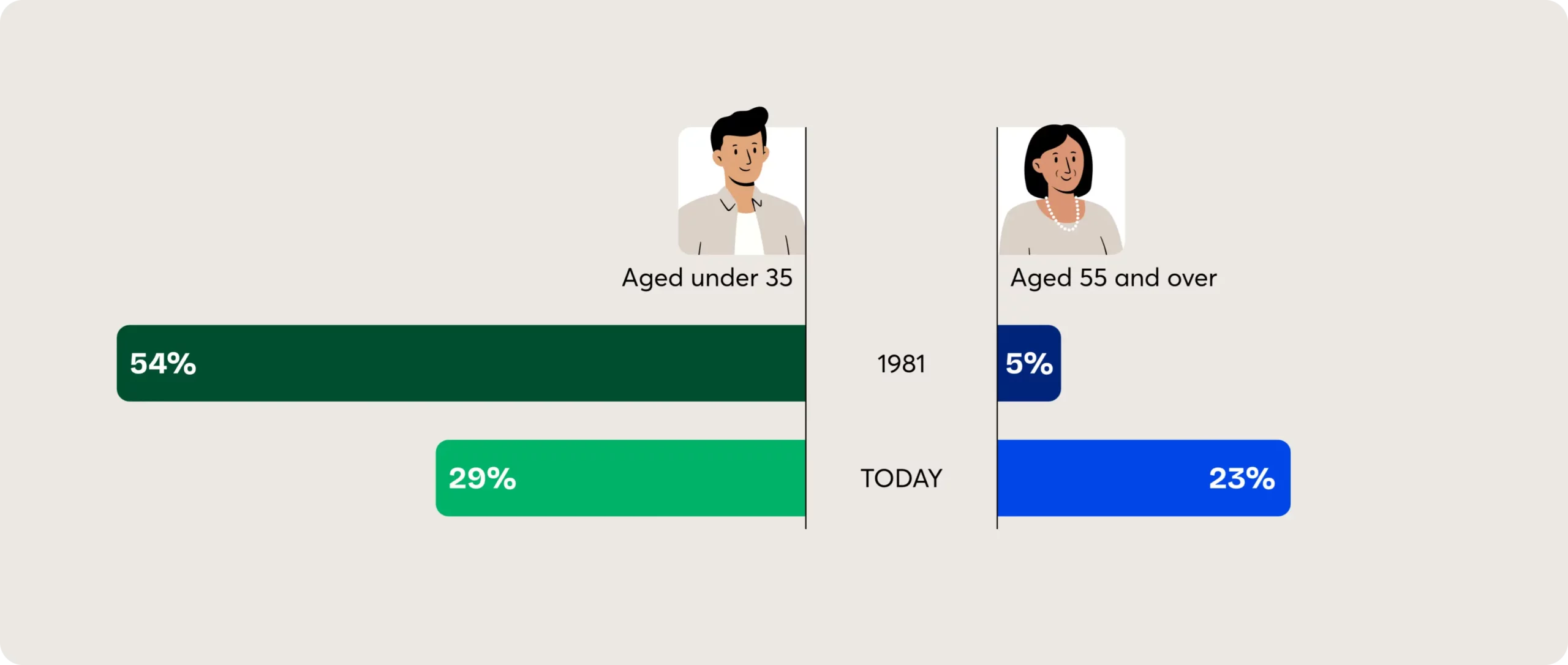
The makeup of the teaching workforce has undergone a dramatic transformation. In 1981, over half of teachers (54%) were under the age of 35. Today, that it’s just 29%. Conversely, the proportion of teachers aged 55 and over has risen from 5% in 1981 to 23% today.
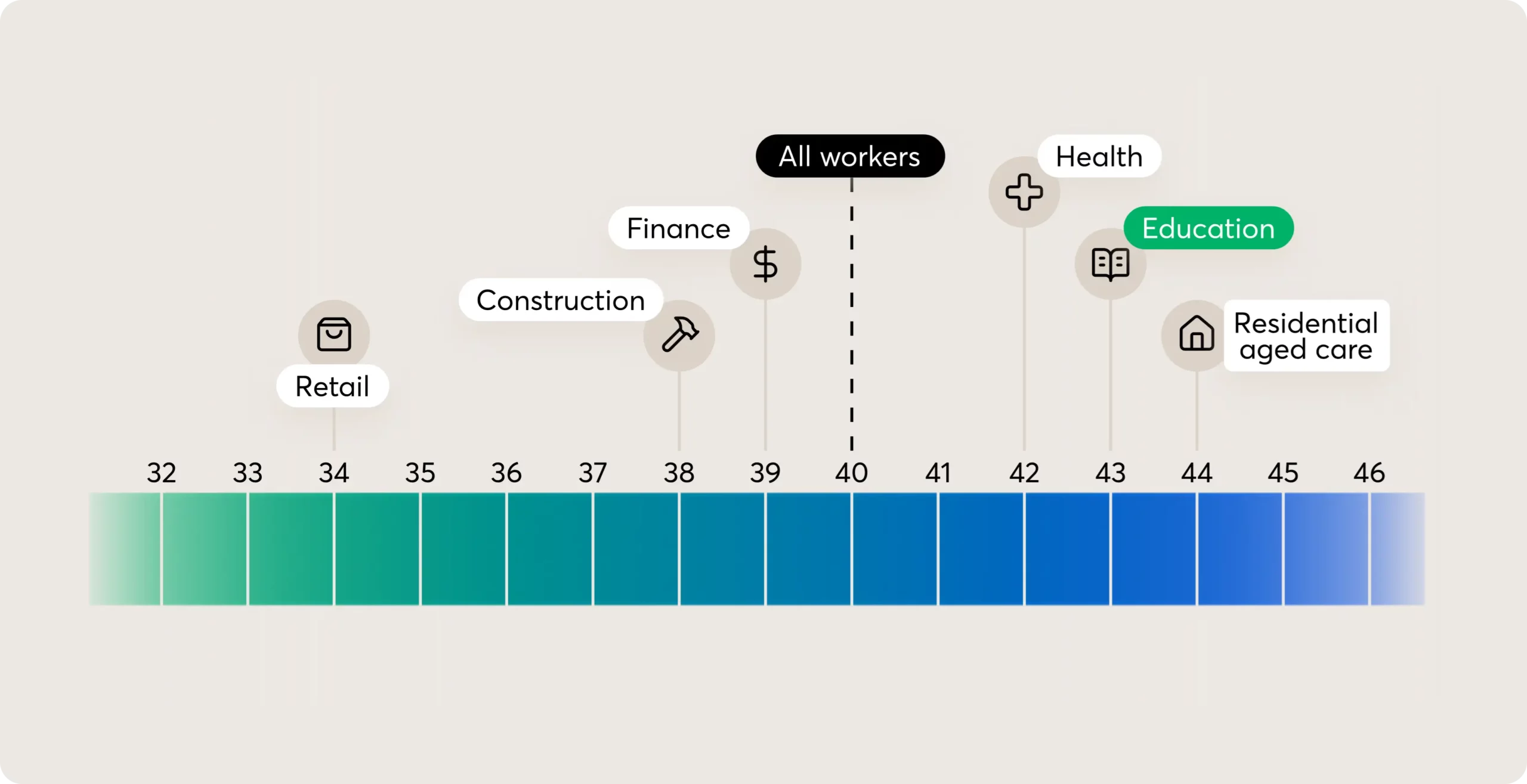
The median age of workers in education compared to other industries tells an interesting story. Education has an older median age than the healthcare sector. In fact, today’s teachers are 1.8 times more likely to be Baby Boomers than Gen Z. With one in four teachers expected to reach retirement age within the next decade, schools must focus on attracting and retaining the next generation.
The recruitment challenge
Not only are the current teachers agine, the recruitment landscape is further complicated by a diminishing flow of new teachers. In 1986, 21% of university students pursued a teaching degree, today it’s just 9%.
In addition to less university students pursuing a teaching degree, schools find themselves in a competitive battle for talent against the post-COVID corporate sectors that provide increased flexibility in work arrangements, roles with lower perceived cognitive strain, and more competitive financial compensation packages.
It used to be that an attractor to teaching was the amount of school holiday time. But with the increased workload being put on teachers, the day to day workload outweighs the benefits of school holidays.
Setting the foundation for teacher success
While schools may not be able to compete on flexibility, workload or financial compensation, there are underlying reasons that people join the teaching profession that should not be overlooked.
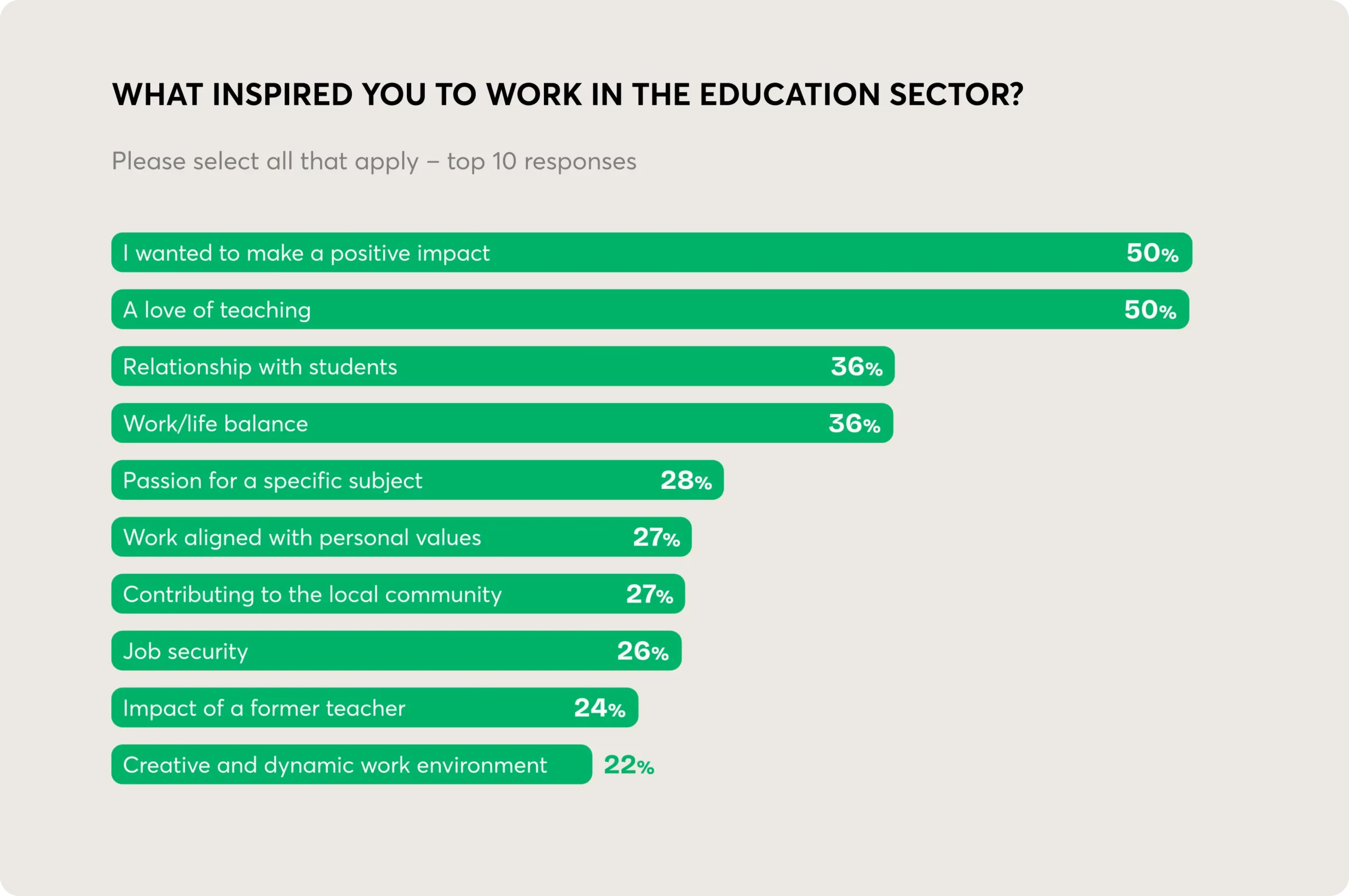
Understanding the primary motivations for entering the education sector is the first step to designing sustainable roles. When asked, educators are most inspired by a desire to make a positive impact, a love of teaching, the relationship with students and work/life balance.
Schools that can remind teachers of the impact they’re having, that build a school they thrive in, and support them through the challenging parts of the role will set the foundations for teacher success and retention.
What can schools do to better support teachers
When asked what schools can do to support them, three in four educators prioritise psychological safety through mental health days (43%) and providing strong support for staff engaging with difficult parent interactions (43%). This is particularly relevant as the emerging generation is highly sensitive to psychological safety. For example if the always-on nature of parent communication is not managed well, this could increase the risk of staff leaving for corporate roles where there is the perception that log-off times are more respected.
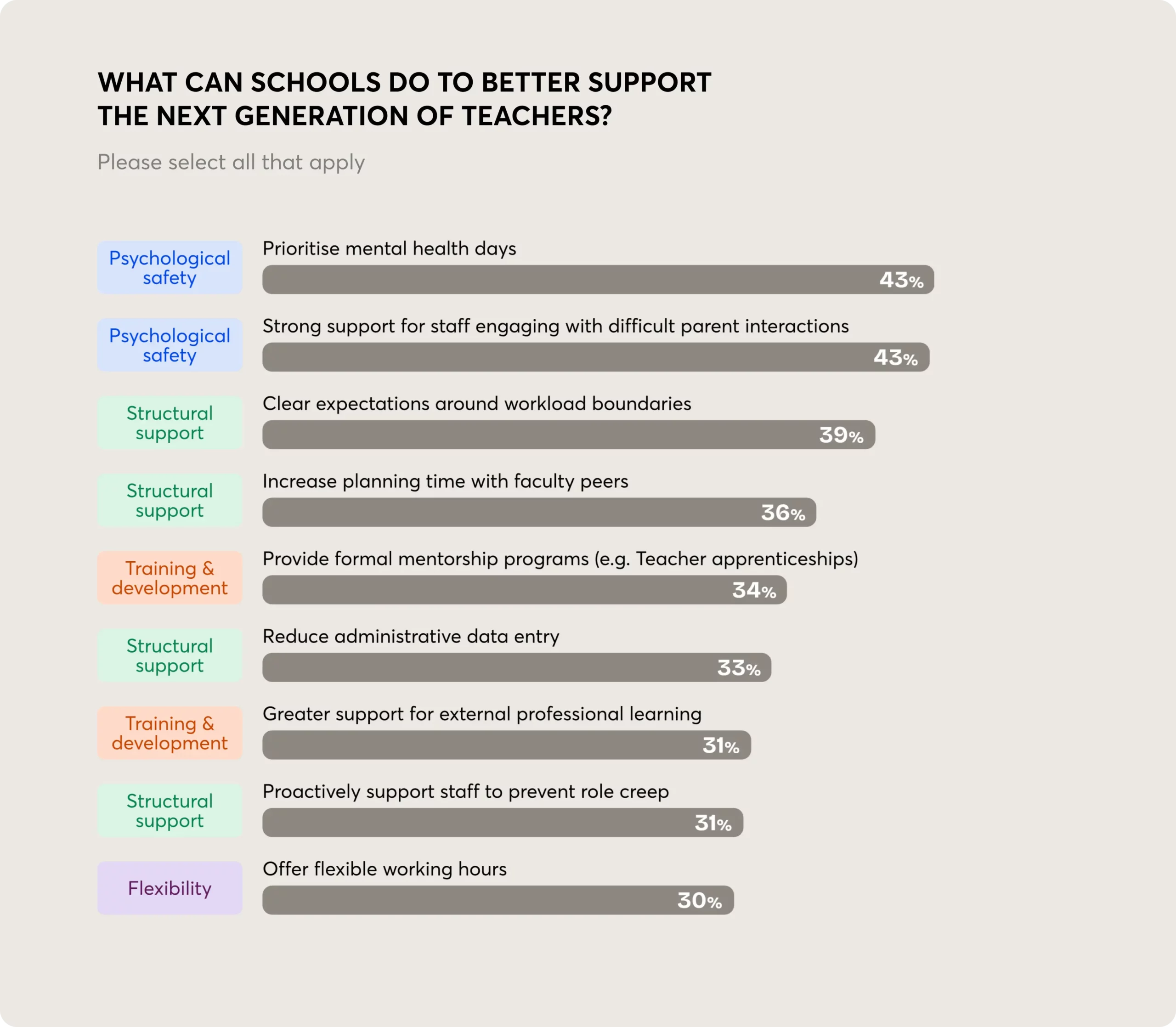
Structural changes can also support teachers through clear expectations around workload boundaries (39%), increased planning time with faculty peers (36%) and reduce administrative data entry (33%). Wellbeing support through proactively supporting staff to prevent role creep (31%) is also a structural lever school leaders can utilise. This ensures teacher capacity is protected for core pedagogical duties rather than being depleted by shifting administrative demands – this also taps into the key reasons for joining the profession.
The teacher-leadership pipeline
Almost three quarters of teachers (73%) aspire to a leadership position. This presents a great opportunity for schools to develop their teachers and provide pathways to leadership positions.
The greatest attractors to a school leadership position for educators are increased salary and financial rewards, personal professional growth and challenge and ability to influence school-wide change. When it comes to the barriers to leadership positions, there is a mix of organisational culture and systemic complexity. High levels of occupational stress, unsustainable workload and time demands and expectation of 24/7 availability are the top barriers to a leadership position.
These are all elements that school structures and policies can work to alleviate. The complexity of the operating environment, however, is a constraint to upskill leaders to work within. Many see the bureaucratic and administrative compliance burden and complexity of managing staff conflict as key barriers to a leadership position. Teachers who don’t aspire to leadership are 1.6x more likely to see workload and time demands as unsustainable.
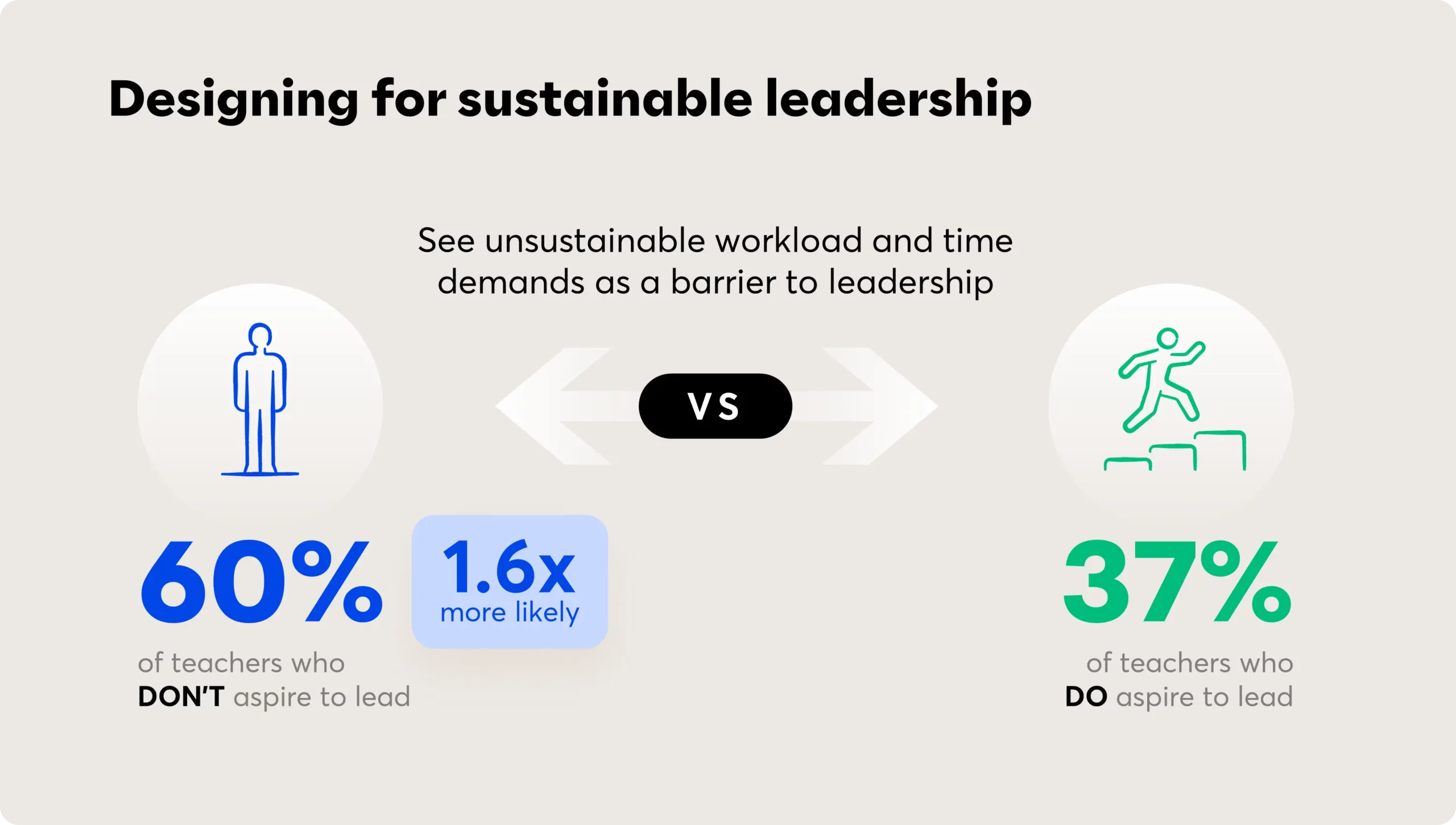
Today’s school leaders act as a mirror for the next generation. If teachers see their leaders constantly stressed, overwhelmed, and bound to their emails on weekends, they will view leadership as a burden rather than a career goal. To attract future leaders, schools must proactively counter this narrative by supporting current leaders to model healthy boundaries and sustainable excellence.
Tips for leaders
In light of this, how can school leaders respond?
- Keep leading with purpose, meaning and vision. The social calling of being an educator, impacting the next generation is key.
- Build systems that support a sustainable workload for educators and leaders.
- Promote realistic professional expectations. Communicate clear expectations and support staff to deliver them with encouragement, skills and feedback that helps them grow.
- Cultivate a culture of support, ‘active backing’ to move forwards in the parent and teacher partnership.
- Clarify and align leadership pathways as well as promote intentional mentoring to help people progress in their career.
With these insights and by responding to the drivers, barriers and reasons teachers stay and grow into leadership positions, schools can effectively train, retain and grow their teacher-leadership pipeline.
Looking to effectively measure your schools community? Learn more about the Thriving Schools Index.