ARTICLE
Attitudes towards multigenerational living

The traditional linear path of moving out, renting, and eventually buying a home is undergoing a shift. With Australia’s population projected to reach 30 million by 2030, housing supply is failing to keep pace with demand. The national target of building 1.2 million new homes over the next five years is already facing a forecasted shortfall of 262,000 dwellings by June 2029.
This supply-demand squeeze, paired with elevated lending rates, has made traditional home ownership feel increasingly out of reach. Today, 65% of Australians agree that the traditional pathway to owning a home is broken for the next generation.
To put this shift into perspective, the median house price in Sydney now stands at 16.7 times average annual earnings, a staggering leap from 1981 when it was just 5 times annual earnings. Similar pressures are playing out in Melbourne (10.1 times), Brisbane (11.3 times), and Perth (11 times). In response, Australians are thinking creatively about how they live, leading to a significant cultural and demographic shift: the rise of the multi-generational household.
Delayed Independence
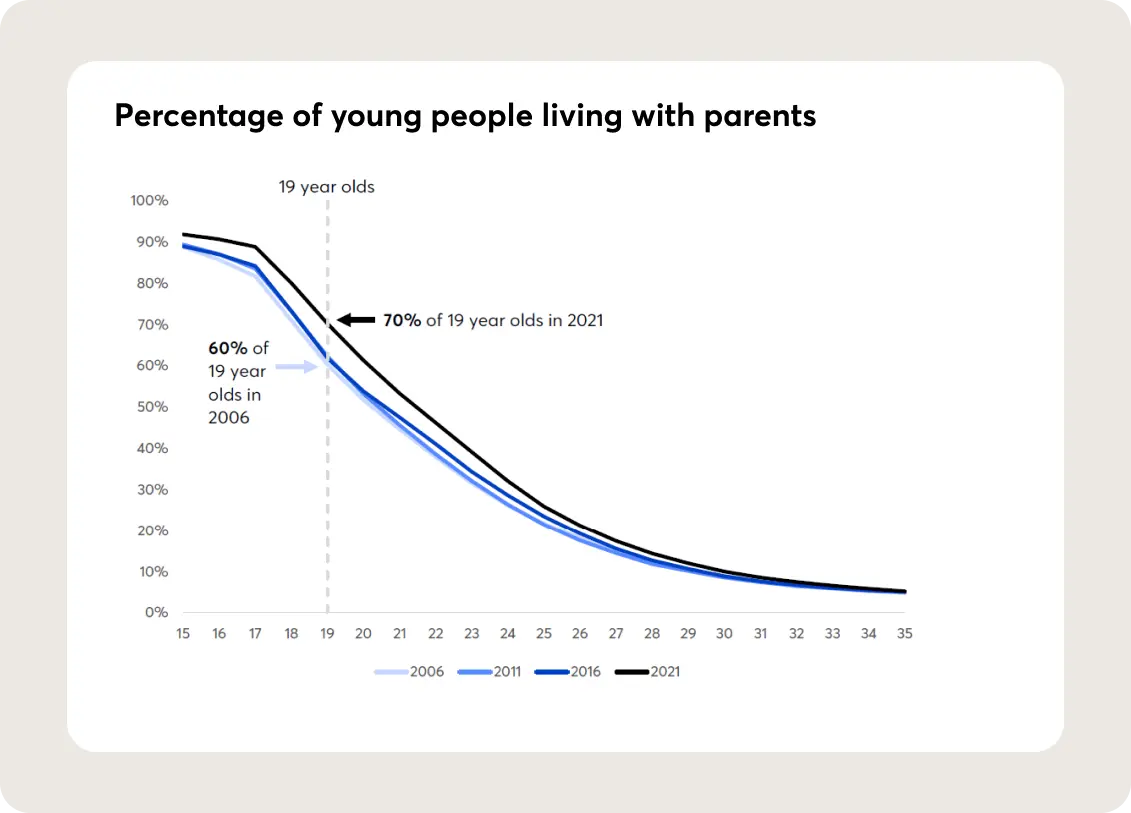
As the property market becomes less accessible, young Australians are adjusting their timelines for independence. Data highlights a clear trend of young adults living with their parents for longer. In 2006, 60% of 19-year-olds lived at home. By 2021, this figure climbed to 70%.
Challenged with high levels of student debt and a highly competitive housing market, many young people are delaying traditional markers of adulthood. Others who had previously moved out are returning to the family nest during their peak earning and family-forming years to pool resources and accelerate their savings for a housing deposit.
Cultural Diversity Driving Openness
Multi-generational living, defined as three or more generations residing under one roof or on the same property, is becoming a mainstream alternative rather than a last resort. Almost three in five Australians (57%) state they are open to or would welcome living in a multi-generational home with their family.
This living arrangement is already deeply woven into the Australian social fabric. Nearly half of the population has first-hand experience with it: 12% currently live in a multi-generational home, and 32% have done so in the past.
Cultural backgrounds play a significant role in this openness. Australians who speak a language other than English at home are significantly more likely to have lived in a multi-generational household (71%compared to 39% of English-only speakers). As Australia continues to grow in cultural diversity, the appetite for shared family living is expected to rise.
Space vs. Boundaries
While Australians are increasingly open to the concept of shared living, they are highly protective of their personal space. When forced to choose, a decisive 73% of Australians would prefer to live in a smaller apartment with total privacy rather than a larger, higher-quality home shared with multiple generations where privacy is compromised.
This desire for autonomy is consistent across the lifespan, with Gen Z (81%) and Baby Boomers (79%) placing the highest value on independence. Consequently, Australians identify the following as the primary hurdles of under-one-roof living:
- Lack of privacy
- Lifestyle clashes
- Disagreements over household rules
- Elevated noise levels
Financial Relief and Deeper Connection
Despite the challenges, the practical and social benefits of multi-generational living are compelling. In a economic climate where 77 % say they are highly concerned about the cost of living.
Top Benefits of Multi-Generational Living:
- Shared living costs
- Support for older family members
- Stronger family relationships
- Combating loneliness
- Childcare assistance
Beyond the immediate financial relief and the ability for younger generations to save for a deposit, this trend intersects with Australia’s rapidly ageing population. With the number of Australians aged 65 and over set to increase in the coming decades, multi-generational homes offer a practical alternative to aged care. This is particularly relevant for Gen X, who often find themselves managing the care of both their children and their ageing Baby Boomer parents.
Furthermore, at a time when society is navigating a broader loneliness epidemic, half of the population views shared living as an opportunity to foster stronger family bonds and build meaningful everyday connections.
For more on attitudes towards multigenerational living access the full report on McCrindle Plus.