ARTICLE
Communicating with todays parents

We work with a lot of schools at McCrindle, and whenever we run school stakeholder studies one of the top discussion points is usually on the topic of communicating with parents.
Today’s school parents require a new approach to engagement. Rising communication expectations place significant pressure on Principals and Community Relations teams. Traditional, long-form updates no longer work for today’s busy families. The corporate world has moved away from the annual staff review as the primary feedback vehicle. Instead, today’s employees expect more frequent, informal feedback interactions.
There is a similar expectation shift in school communication. School leaders need to look beyond the annual parent-teacher interview or bi-annual student reports.
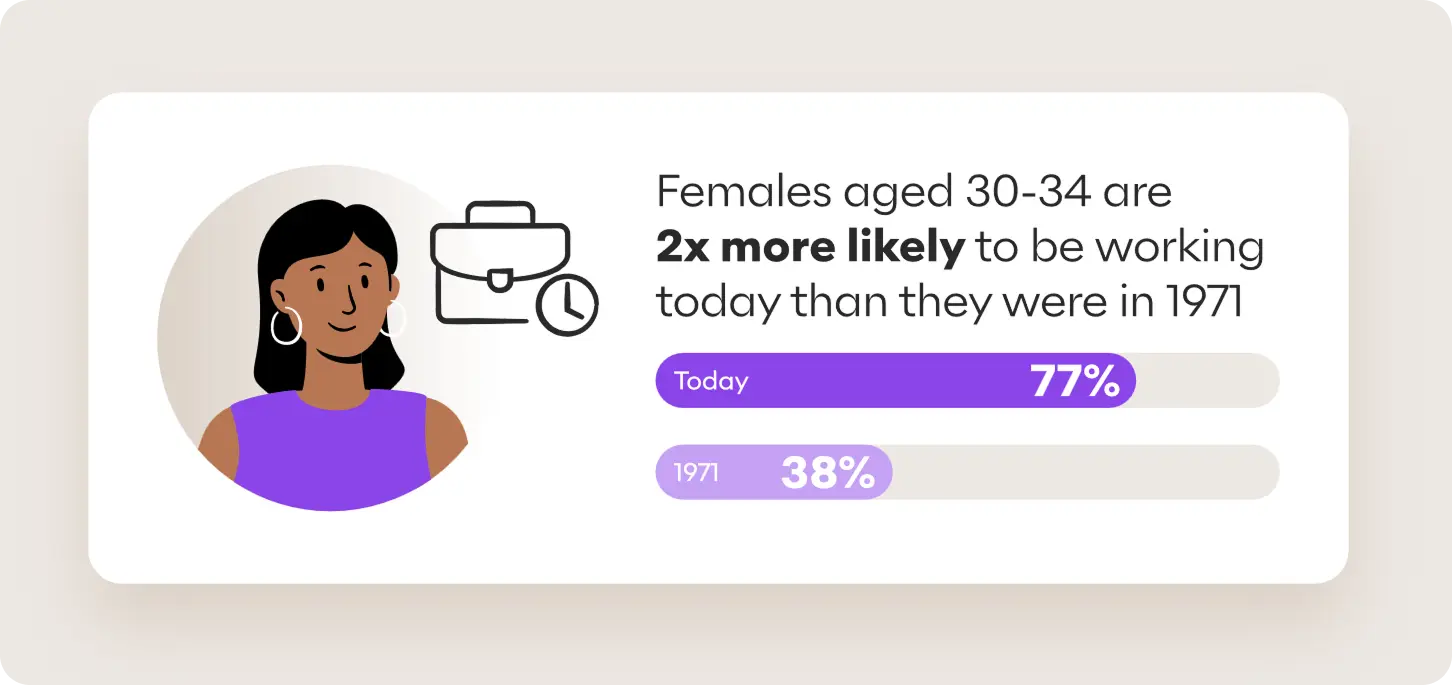
When thinking about parent engagement, we start with the realities for today’s parents. We highlighted in a report published last year data from the ABS shows that females aged 30-34 are 2x more likely to be working today than they were in 1971.
More busy, dual income families, and also more single-parent and blended families leads to parents engaging with schools differently.
Effective parent engagement begins by delivering specific information families value most.
Modern parents are likely to place equal value on social-emotional updates as they do academic progress.
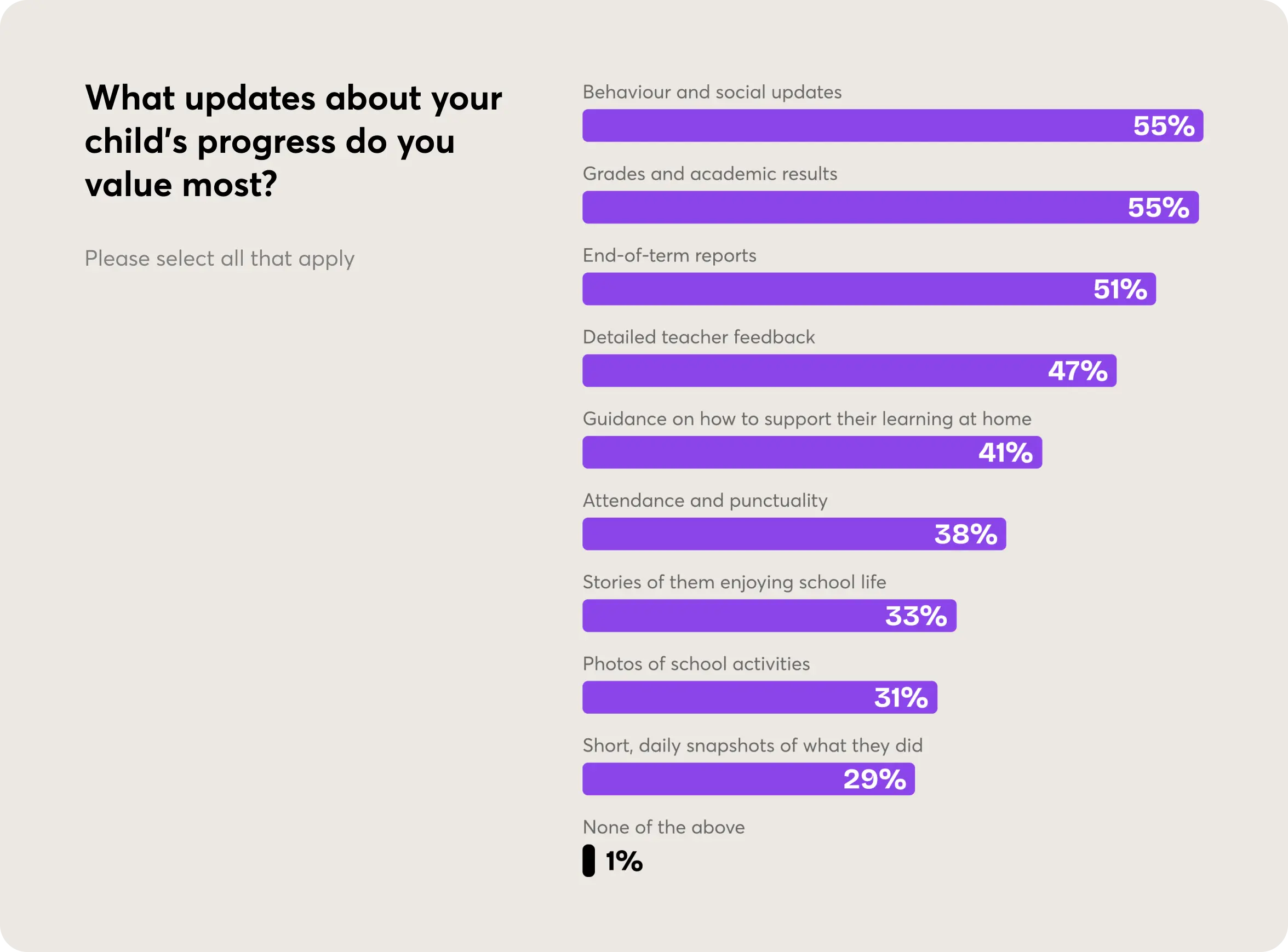
School parents are equally likely to value updates about how their child is doing socially (55%) as they are about their child’s academic results (55%). This suggests school leaders should give equal priority to social and academic updates in future communications.
Connecting with families through care and responsiveness
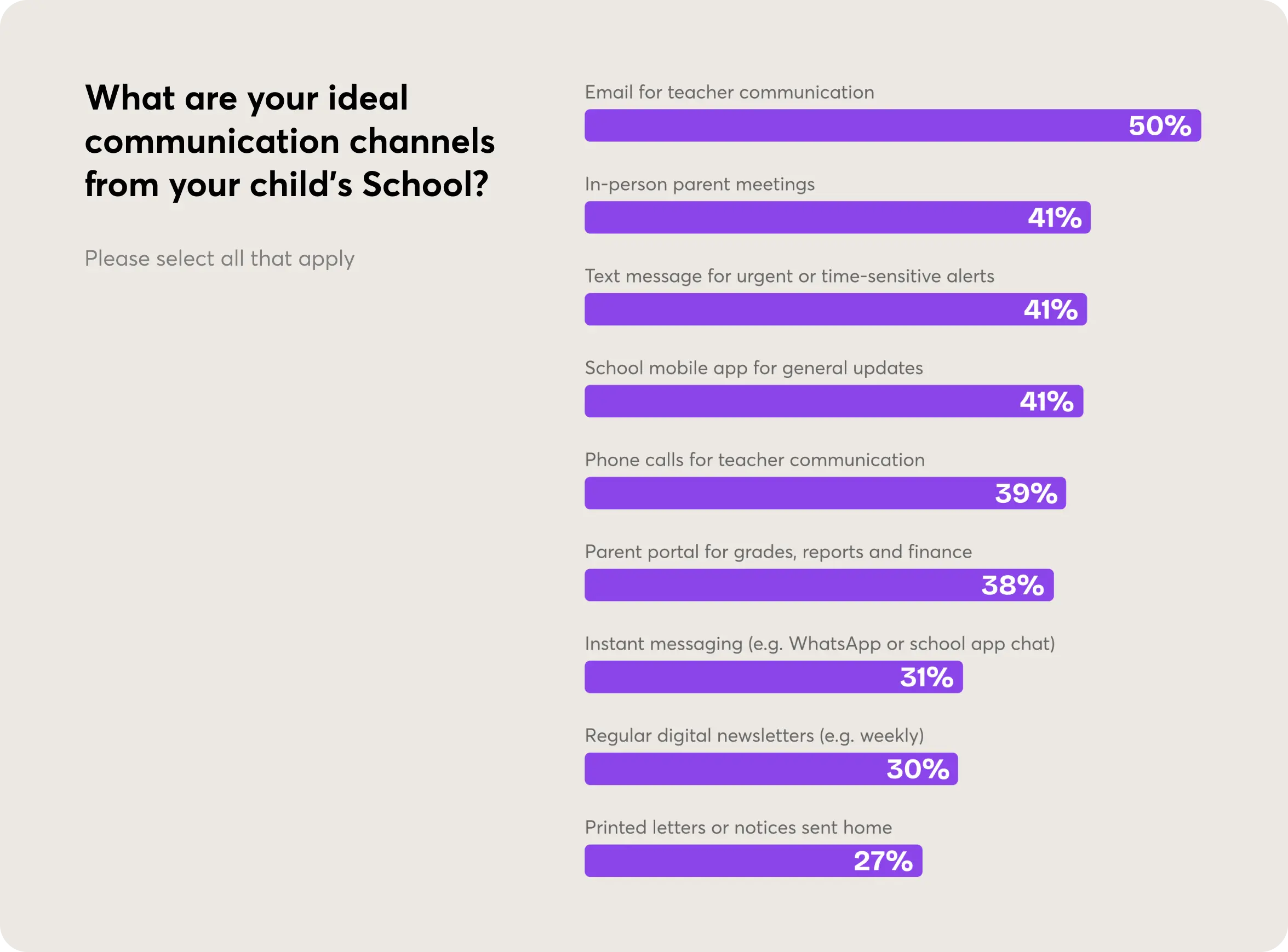
Unsurprisingly, school parents value different channels for different types of information. Email is the ideal form of teacher communication, whereas parents are less likely to value traditional communication channels, ironically the channels most schools are likely to be using as the default.
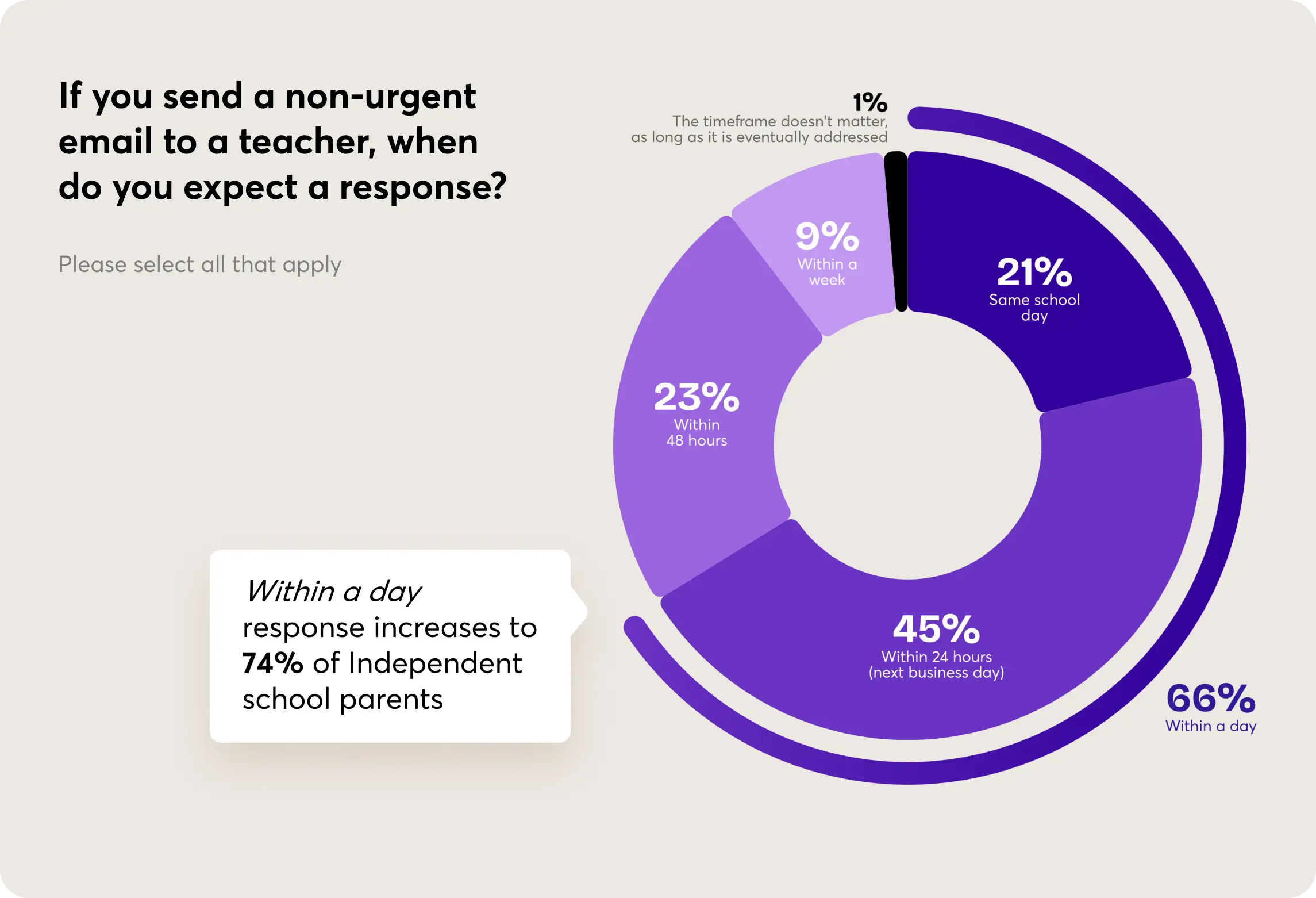
Two-thirds of parents expect a response within 24 hours
The next generation of parents has grown up in an era shaped by instant information and ondemand services. From real-time tracking to rapid delivery, this daily environment naturally influences communication expectations within the school community. Because timeliness is a key element of family engagement, understanding these communication baselines is essential.
Almost half of parents (45%) expect a response to a non-urgent email within 24 hours. Furthermore, one in five (21%) look for a reply on the same school day. Combined, this means two-thirds of families (66%) expect a turnaround within a 24 hour period. The broader baseline, however, sits at 48 hours, with nine in ten parents (90%) expecting a response within this timeframe.
Are you measuring parent sense of belonging and partnership? Or just satisfaction?
In light of these growing parent expectations, today’s Principals and Community Relations leaders need lead indicators they can rely on to track family engagement and retention. The problem is that most schools are only measuring satisfaction. And in doing so, this may be inadvertently reinforcing the very ‘consumer’ mindset that you’re trying to steer families away from.
Satisfaction alone can also be a lagging indicator. Once people are dissatisfied, they may already have been looking elsewhere.