ARTICLE
The 2026 Australian Census

While we often think of data as a modern obsession, the world’s first-ever census was conducted more than 5,800 years ago. For demographers and researchers, there are few dates on the calendar that are more exciting.
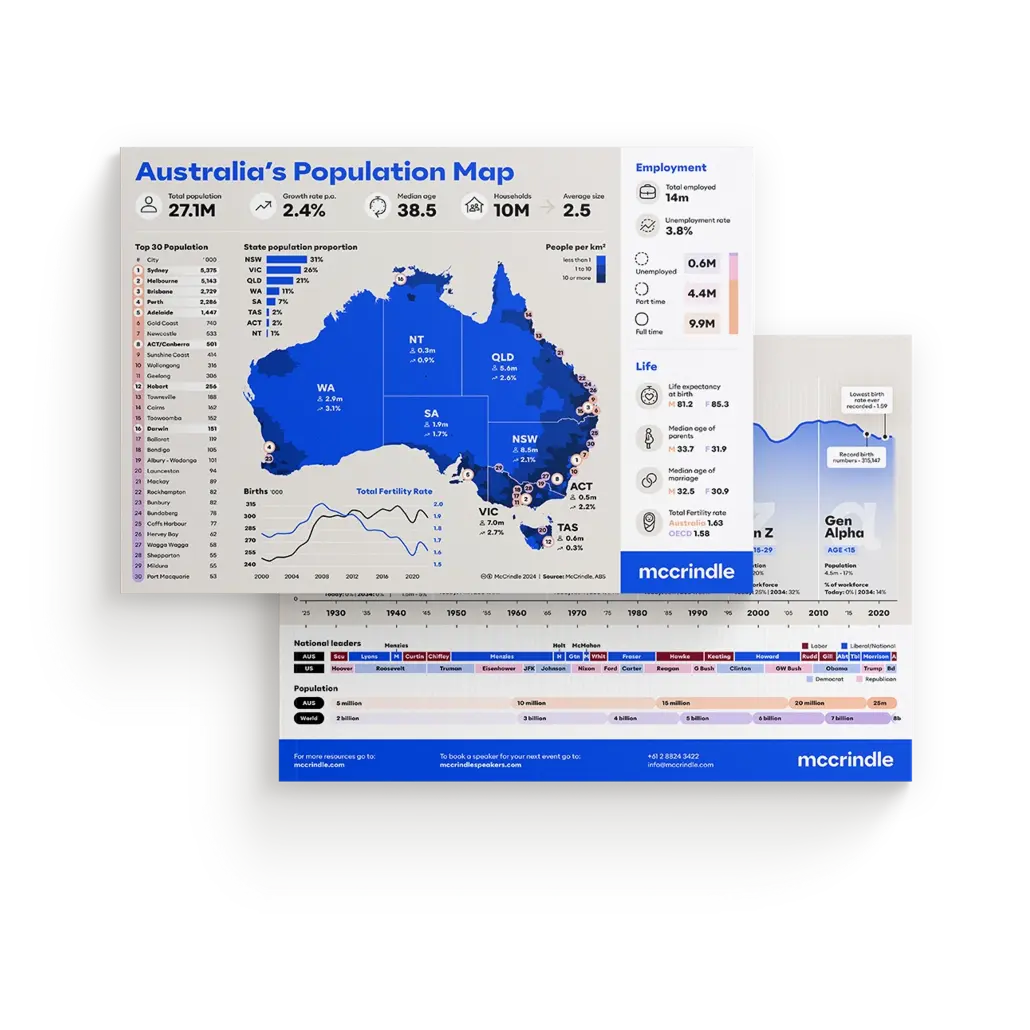
As the largest statistical collection in the country, the Census has become the most reliable and comprehensive dataset used to understand who we are as a people and how our society is changing over time. And recently we reached 100 days until the 2026 Australian Census.
Coming from the Latin word ‘censere’, meaning to assess, to rate or to estimate, a Census is the most comprehensive dataset a country has. With Australia’s population now approaching 29 million, the 2026 Census will provide a vital snapshot of a nation navigating new social, economic, and technological frontiers.
The 2026 Census Timeline
- April 2026: The official Census website and awareness campaigns launch.
- Late July 2026: Households begin receiving instructions. In a first for this cycle, Australians can receive their digital Census forms directly to their inbox.
- Census Night: Tuesday, 11 August 2026.
How the data is used
The data collected on 11 August 2026 will influence key areas in business, policy, government and other areas of Australian life. These insights are used by both the public and private sectors to:
- Plan infrastructure: Informing where new schools, hospitals, and community spaces are built.
- Allocate funding: Underpinning the distribution of billions of dollars in Commonwealth funding to states and local governments.
- Business application: Census data is used by a range of businesses to make better decisions based on national trends.
What demographers will be watching
As demographers we’re awaiting the data to answer key questions in light of the 2021 Census results, and in light of new questions being asked.
- The indigenous milestone
One of the fastest-growing areas of the demographic story has been the number of Australians identifying as having Aboriginal and/or Torres Strait Islander origin, increasing from 650,000 in 2016 to 813,000 in the 2021 Census. Will this increase continue into 2026?
- Sexual orientation and gender
For the first time, the Census includes a new question on sexual orientation and gender (for those aged 16+). Like religion, this is one of the few optional questions on the form. In the 2021 Census, 7% of Australians chose to opt out of the religion question, will the same happen to the new questions?
- Faith association
In 2021, the proportion of Australians identifying with Christianity fell to just 44%. Will the declining Christian affiliation slow in 2026?
- Post-lockdown life
The last Census was conducted during the 2021 lockdown, capturing a spike in Work from Home (WFH) numbers and a dip in those who spend time volunteering. In 2026, how will the work from home numbers compare? And what about volunteering which was increasing until the 2021 lockdown Census?
- Long-term health condition
In the 2021 Census, mental health condition was the most prevalent long-term health condition for Australians, followed by arthritis, asthma, diabetes, and heart disease. With an ageing population and dementia now the leading cause of death for Australians, will the 2026 data reveal a different story?
View this post on Instagram
When will the Census data be available?
Given the task of analysing data from over 10 million households, the Australian Bureau of Statistics (ABS) will release the 2026 results in stages:
- June 2027: The first release, covering key demographic and population data.
- Late 2027: The second release, focusing on labour force data, internal migration, and commuting patterns.
- Early 2028: The third release, featuring more complex topics like socio-economic indexes and homelessness estimates.
Looking Ahead
At McCrindle, we are passionate about making this data visual and actionable. Whether you are a business leader planning your next move or a community leader looking to understand your changing neighbourhood, the 2026 Census will be your most valuable resource.
If we can help you analyse upcoming Census insights or advise on what the 2026 data means for your organisation, simply get in touch.