ARTICLE
The impact of global events on morale and behaviour

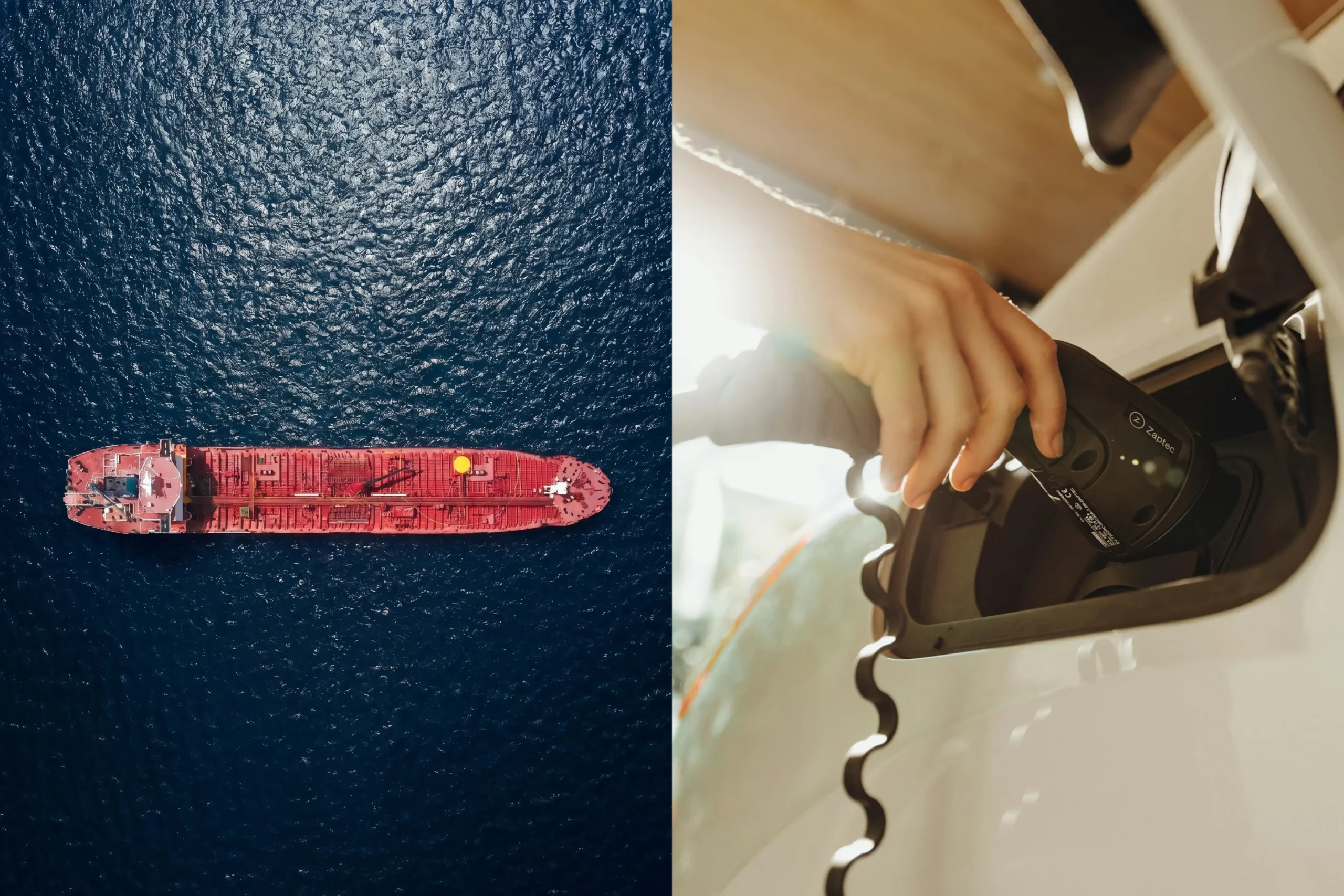
We’re living in a time of ongoing volatility. With the initial years of the decade being defined by a post-pandemic recovery, the current climate, shaped by geopolitical conflict in the Middle East and a subsequent global fuel crisis, has created a perma-crisis. A state of ongoing crisis.
New data collected in April 2026 reveals a nation responding to volatility not with paralysis, but with a surprising degree of agency and open mindedness toward new technologies.
How long will the conflict last?
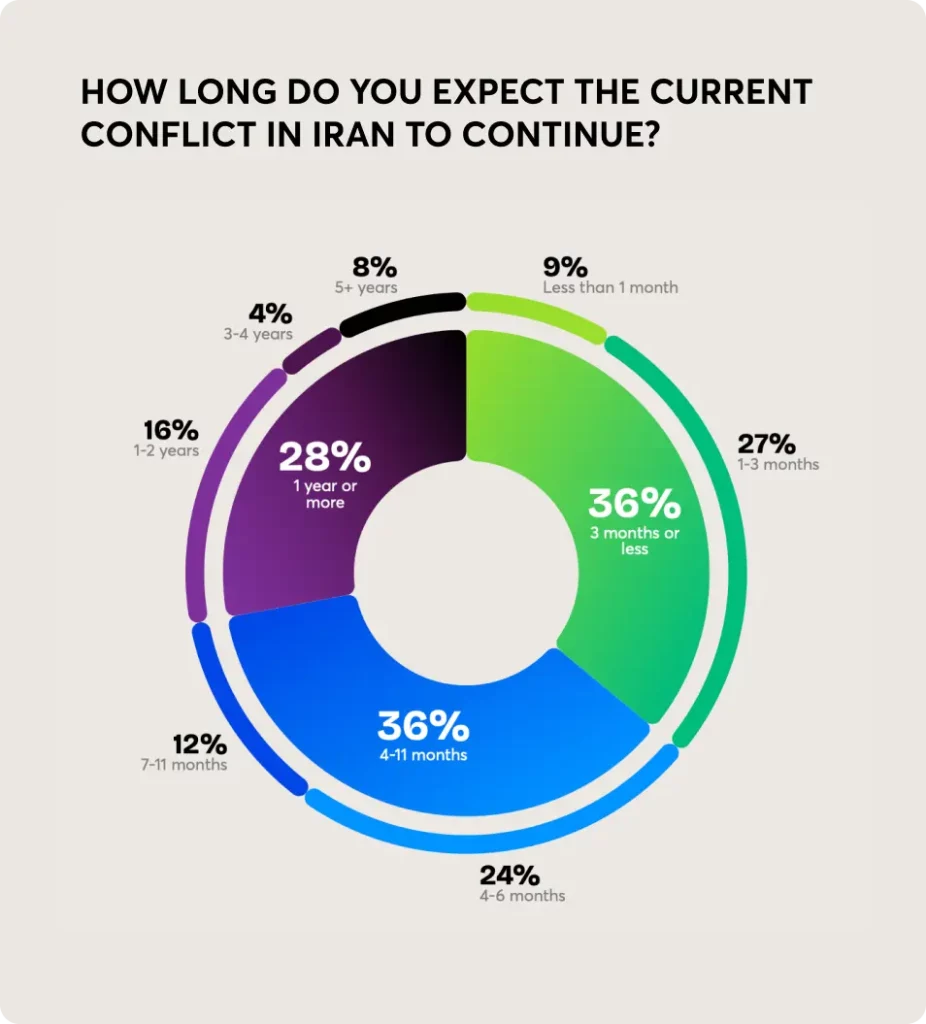
Australians are split on how long the conflict in Iran might last. When asked how long do you think the conflict in Iran is going to last a third (36%) say 3 months or less, another third (36%) said 4-11 months and another third (28%) say 1 year or more.
Anxiety and frustration is higher than during the pandemic
When asked, 51% of Australians report feeling anxious, which is higher than the early days of the pandemic in early 2020 (45%). Unlike the health-driven crisis of the pandemic, the current volatility is perceived as more personal and more frustrating.
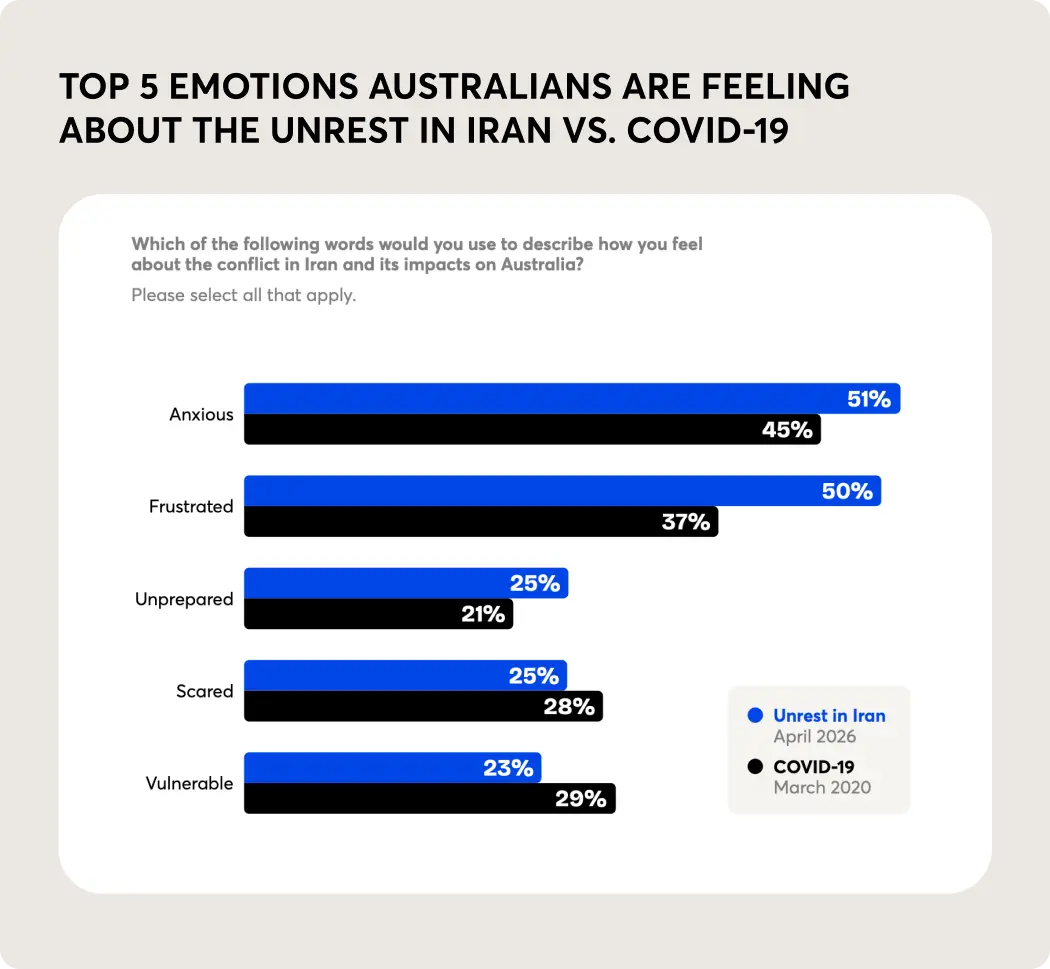
Half the nation (50%) report feeling frustrated, compared to just 37% during the pandemic. The cumulative effects of ongoing crisis are being felt we are witnessing a crisis fatigue where emotional reserves are lower, making empathy a core leadership competency for 2026.
Behaviour change in response to fuel costs
The surge in fuel prices, which saw diesel and petrol costs increase has moved from just a headline to behavioural change. Australians are re-thinking their daily habits in ways that could have long-term implications:
- 55% of the population has limited driving to essential trips only.
- 23% say they’ve started taking public transport more instead of driving.
- 20% say they’ve started walking more instead of driving.
The EV tipping point
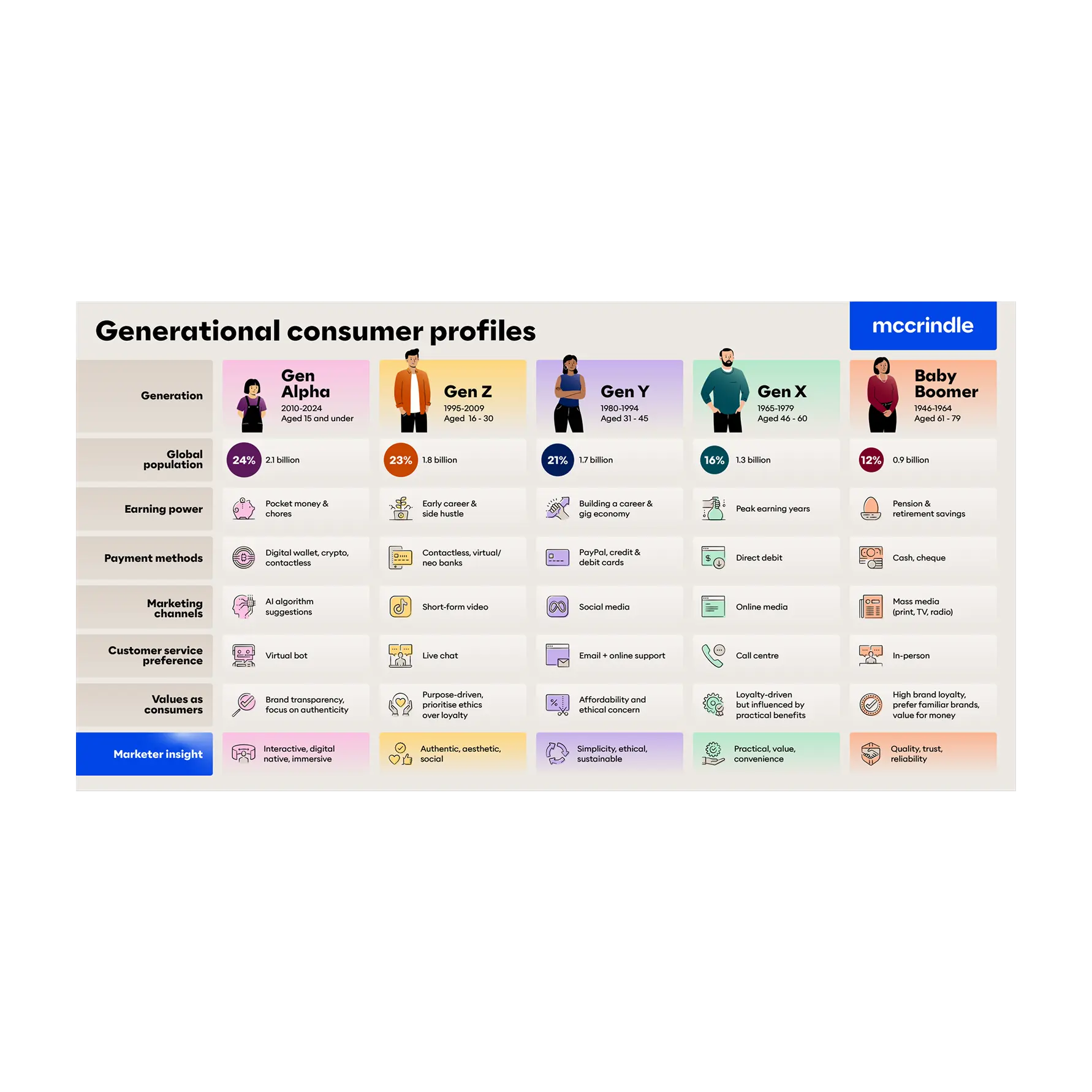
Electric vehicles have seen a gradual adoption over the years and in March 2026, battery EV car sales in Australia doubled compared to the previous year, now comprising 15% of total car sales. One in three (31%) Australians are extremely or very open to purchasing an EV. When looking at the generational differences 53% of Baby Boomers remain hesitant with 52% of Baby Boomers not open at all to owning an electric vehicle, compared to 12% of Gen Z, 24% of Gen Y and 41% of Gen X.
Just as COVID forced people to work from home and saw the rapid adoption of remote work, could this be the catalyst for EV car adoption?
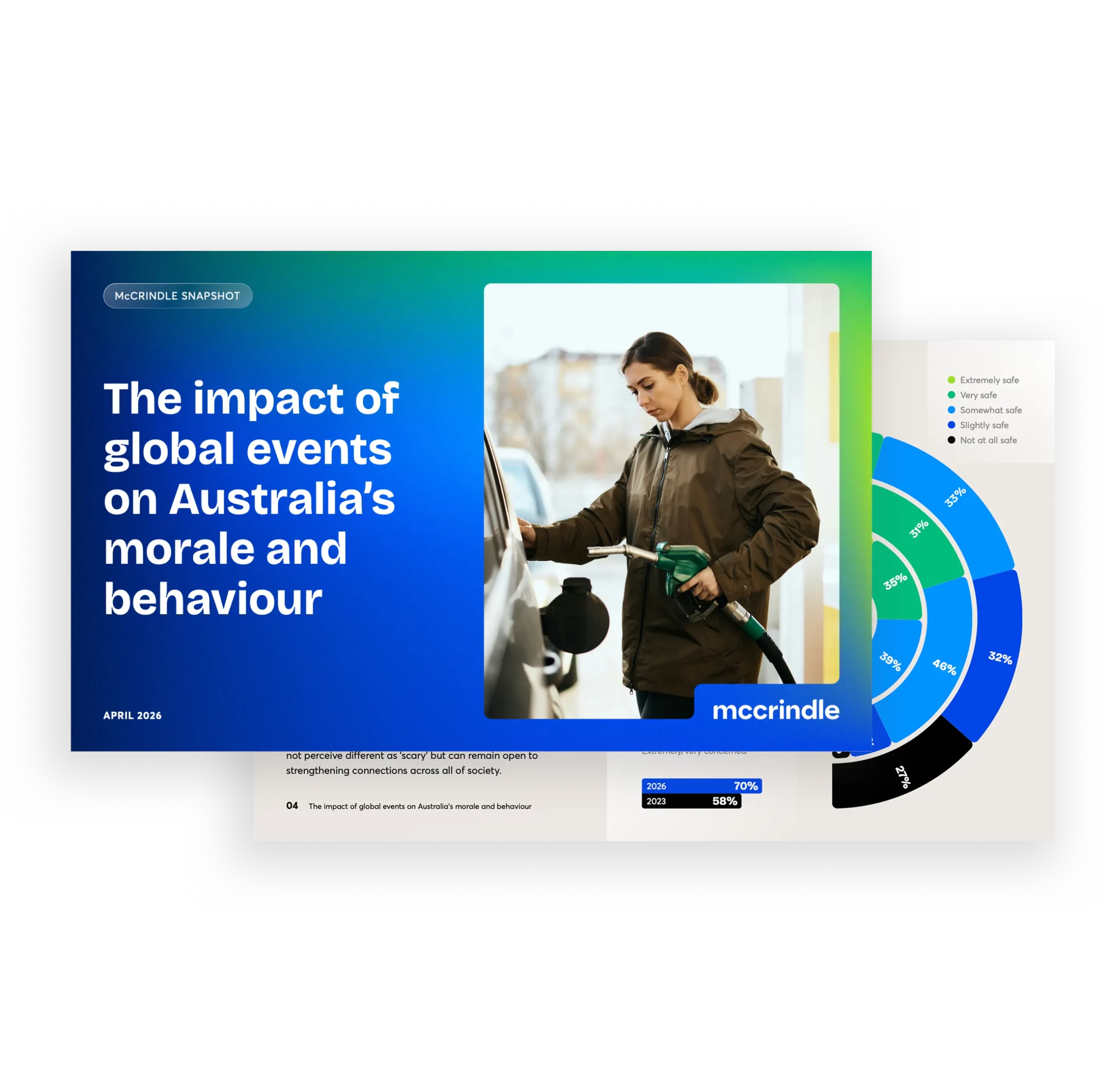
For all of the insights from this report, download The impact of global events on morale and behaviour.