Generation Alpha
Understanding Generation Alpha

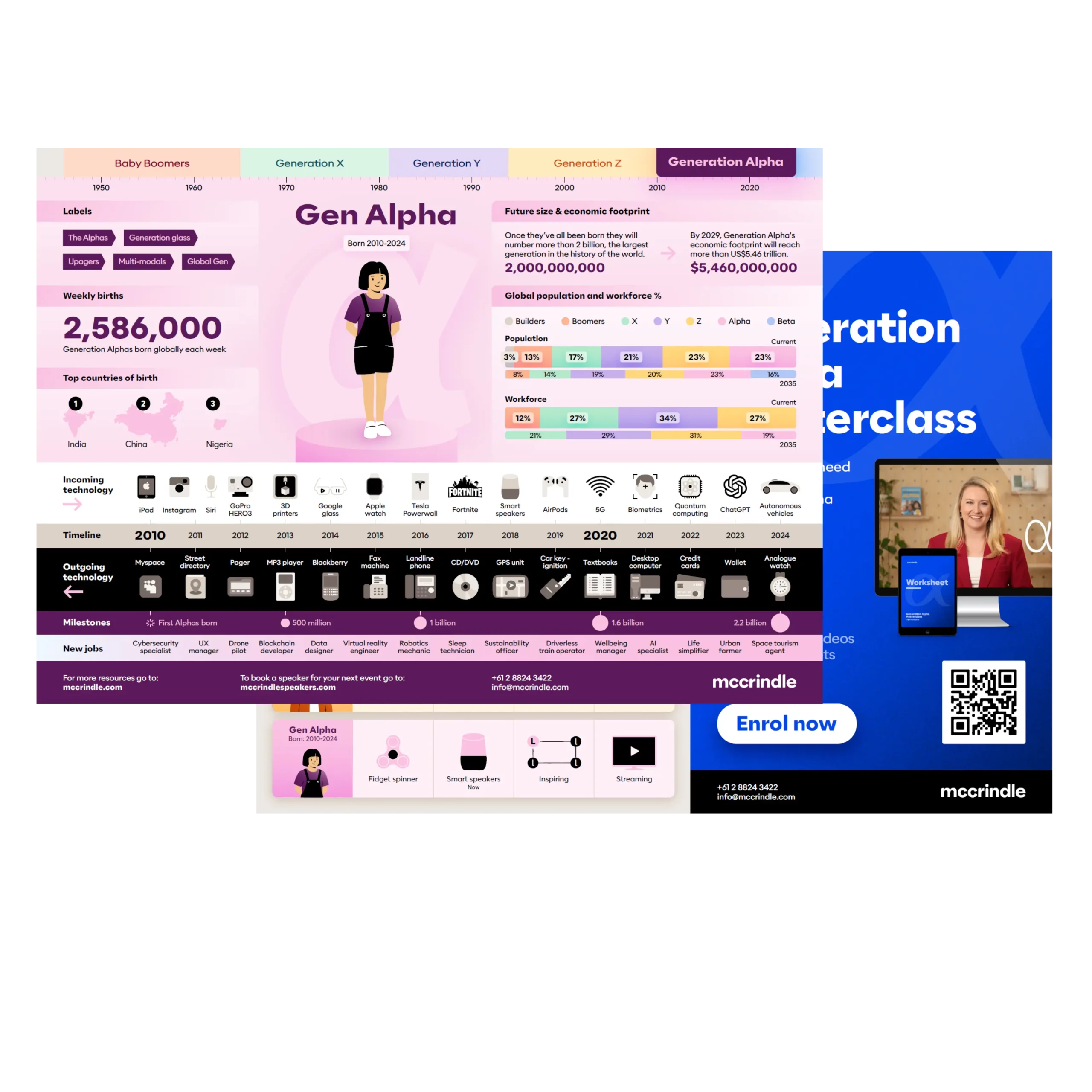
There is a growing generation that few people have heard of. Within the next few years they will outnumber the Baby Boomers, and many of them will live to see the 22nd Century.
We’re talking about Generation Alpha, the children of Generation Y, and often the younger siblings of Generation Z. Simply put, Generation Alpha are defined as those born from 2010-2024. More than 2.8 million are born globally every week. When they have all been born (2025) they will number almost 2 billion – the largest generation in the history of the world.
In this article:
- Who are Generation Alpha
- The most materially endowed generation ever
- Generation Alpha’s economic footprint
- Why are they called Generation Alpha?
Who are Generation Alpha?
While they are the youngest generation, they have brand influence and purchasing power beyond their years. They shape the social media landscape, are the popular culture influencers, the emerging consumers and by the end of the 2020’s will be moving into adulthood, the workforce and household formation, ready or not.

The most materially endowed generation ever
Gen Alpha are the most materially endowed generation ever, the most technologically savvy generation ever and they will enjoy a longer life span than any previous generation.
They will stay in education longer, start their earning years later and stay at home with their parents later than even their predecessors, Gen Z and Gen Y. The role of parents therefore will span a longer age range – with many of these Gen Alphas likely to be still living at home into their late 20’s.
View this post on Instagram
The great screen-age
This newest generation are part of an unintentional global experiment where screens are placed in front of them from the youngest age as pacifiers, entertainers and educational aids. This great screen age in which we are all living has bigger impacts on the generation exposed to such screen saturation during their formative years.
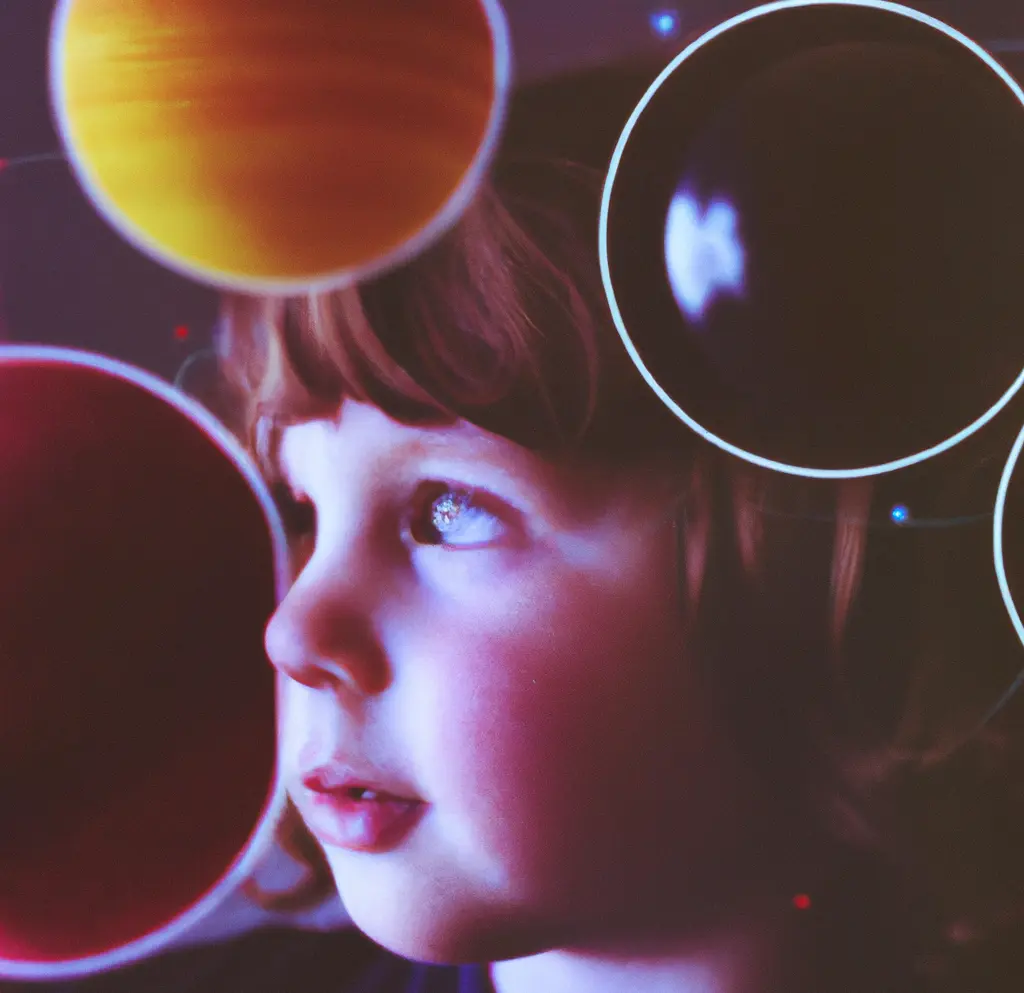
From shorter attention spans to the gamification of education, from increased digital literacy to impaired social formation, these times impact us all but transform those in their formative years. Generation Alpha began being born in 2010, the year the iPad was launched, Instagram was created, and App was the word of the year- and so from their earliest years, they have been screenagers.
How will Generation Alpha learn?
With the increase in screen and technology, there’s no doubt that Generation Alpha will feel this influence in their schooling.
For many, their childhood likely involved doing things that were new experiences, like taking piano lessons, playing sports with friends or reading books. These experiences helped shape them because they were engaging and gave opportunities to learn.
While this is likely to happen still, the way Gen Alpha learn involves technology and has become more advanced and accessible through devices such as smartphones and tablets. This is already a trend among their forerunners, Gen Z, with TikTok (42%) the third most engaged with platform by students to teach themselves new skills, coming in above parents (39%).
More people than ever, especially the emerging generations have access to information about anything with the rise of the internet.
Empowerment and resilience of Generation Alpha
While the technological fluency of Generation Alpha is well-documented, their impact will be defined by how they balance their empowerment with the timeless human skills that technology cannot replicate. With technology, where information is just a voice command or a few clicks away, they don’t have to learn, memorise or follow structured instruction in the same way. Particularly with the rise of AI, it means they haven’t always had to develop the grit, the fortitude and the hard work to build strong foundations. We see both more participation and empowerment, but also less resilience.
When people develop resilience and adaptability, they are able to overcome adversity and thrive regardless of the changes around them. Previous generations were often shaped by hardship – war, economic uncertainty, global tensions – and that built independence, resilience and a sense of responsibility to build something for themselves. Today, in more materialistic and technologically saturated times, it can create a sense that the future is more ‘delivered’ to them, that they don’t have to strive as much.
Human skills in an AI-shaped future
As AI continues to automate technical tasks, the most valuable skills will be the distinctively human ones. That means communication skills, people skills, the ability to resolve conflict, to connect, to lead and to manage. In a diverse world, it also requires empathy and understanding. These are the skills this generation will need – alongside purpose, motivation and emotional intelligence. Because they have been more included, more consulted and often treated more as equals, this generation can develop a more collaborative, inclusive and participative leadership style. That is a real strength.
Generation Alpha's economic footprint
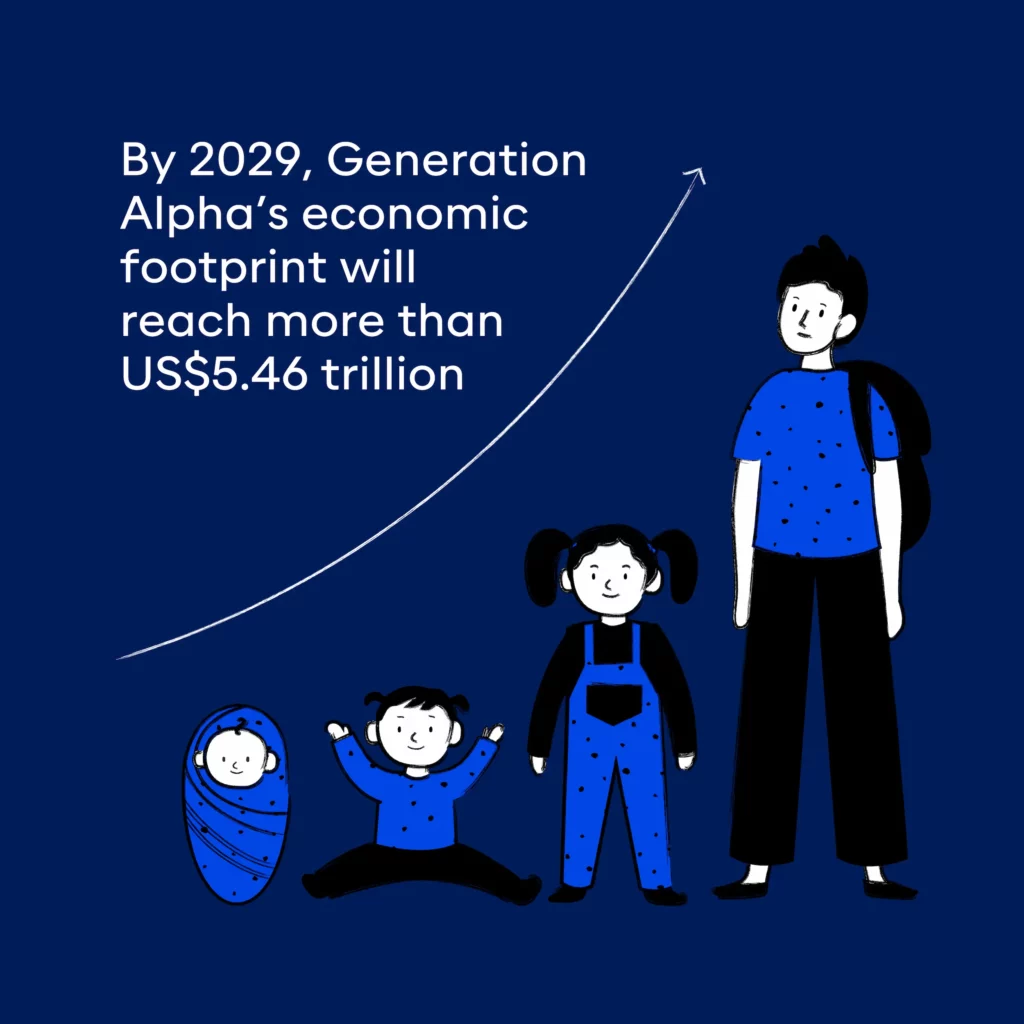
By 2029, when the oldest Generation Alphas enter into adulthood and the youngest Generation Alphas reach the age of five, their economic footprint will reach more than US$5.46 trillion. This means that organisations today should be thinking about the future consumer in Generation Alpha.
Education, AI and declining fundamentals
Global studies like PISA show that literacy and numeracy have declined in many developed countries. At the same time, attention, memory and critical thinking are also in decline. In a complex world, they will need to assess information, make decisions and think critically more than ever. Yet technology can shorten attention spans and reduce mental discipline, so these skills need to be actively developed.
While the tools change, the core human drivers remain the same. Equipping Generation Alpha doesn’t mean focusing solely on tech-literacy; it means focusing on:
Advice for parents
The advice to parents is to parent like grandparents did, at least when it comes to the timeless human skills. Even in times of rapid technological change, the core human drivers remain the same. Children still need to understand consequences, set goals, build discipline, show respect, listen to others and develop strong character and people skills. These are timeless, and they cannot be outsourced to AI or replaced by technology. Parents need to equip children with these human capabilities, not just assume technology will solve everything.
The counter-trend
Whenever you see a strong trend, you often see a counter-trend emerge. Technology has been the defining force shaping Generation Alpha, but we are already seeing signs of pushback. While the tools change, the core human drivers remain the same. Equipping Generation Alpha doesn’t mean focusing solely on tech-literacy; it means focusing on:
- Character formation and discipline.
- Understanding consequences and setting goals.
- Respect and active listening.
More on Generation Alpha
- Everything you need to know about Generation Alpha
- Generation Alpha’s economic footprint
- Why every organisation should be thinking about Generation Alpha
Why did we name them Generation Alpha?
Just over a decade ago, when I was researching my first book The ABC of XYZ: Understanding the Global Generations, it became apparent that a new generation was about to commence and there was no name for them.
This was just after the Atlantic hurricane season of 2005, when there were so many storms that the normal alphabetic names had been used up and so for the first time, the Greek alphabet was used.
In keeping with this scientific nomenclature of using the Greek alphabet in lieu of the Latin, and having worked our way through Generations X, Y and Z, I settled on the next cohort being Generation Alpha- not a return to the old, but the start of something new.
Generational definitions are most useful when they span a set age range and so allow meaningful comparisons across generations. That is why the generations today each span 15 years with Generation Y (Millennials) born from 1980 to 1994; Generation Z from 1995 to 2009 and Generation Alpha from 2010 to 2024. And so it follows that Generation Beta will be born from 2025 to 2039.
If the nomenclature sticks, then we will afterwards have Generation Gamma and Generation Delta, but we won’t be getting there until the second half of the 21st Century so there is plenty of time to reflect on the labels!
For speaking inquiries or media commentary contact us via info@mccrindle.com