ARTICLE
The Power of Social Connections: A Beacon of Hope for Mental Health

In the wake of the COVID-19 pandemic, the global landscape of mental health has been profoundly affected. Across the generations, Gen Z emerged as the most vulnerable, with one in four citing the pandemic’s toll on their mental well-being as the most significant negative impact, surpassing all other age groups.[1]
The Australian perspective
Australia, too, faced its own battle, with over 8.6 million individuals, or 43.7% of the population aged 16-85, experiencing a mental disorder at some point in their lives.[2] The prevalence of anxiety disorders was particularly striking, affecting 3.3 million Australians, constituting 16.8% of the population.
The pandemic’s alarming toll
The pandemic acted as a catalyst, accelerating the global prevalence of anxiety by an astounding 25% within its inaugural year. [3]These numbers are stark reminders of the urgent need for effective mental health interventions and support systems.
The shadow of loneliness
In Australia, 62% of young adults and 46% of seniors reported being lonely, while 55% of the population said they lack companionship at least sometimes.[4] This stark reality underlines the profound impact of social isolation on mental well-being.
Finding community: Vital hubs for interaction
The community park[5] or sports ground holds the greatest importance as a gathering place, with 53% of Australians considering it the primary hub for community interaction. This is followed by the local pub or club (45%), the local shopping centre (44%), the local community centre (43%), and the local school (33%). These spaces play a crucial role in fostering a sense of belonging and connection.
The workplace as a nexus of community
Gen Z are more likely to view the workplace as the most important gathering place in their community (37% Gen Z compared to 34% Gen Y, 28% Gen X, and 18% Baby Boomers).[6] This underscores the evolving dynamics of social interaction, with younger generations finding community within professional environments.
5 catalysts of connection: Where communities flourish and minds thrive
“Park Playmates “: Community parks take centre stage in fostering connections.
“Pub-lic Pals”: Local pubs and clubs continue to be cherished social hubs.
“Retail Therapy Reimagined”: Shopping centres emerge as vital spaces for interaction.
“Community Centres: Core Connections”: Local hubs play a pivotal role in community cohesion.
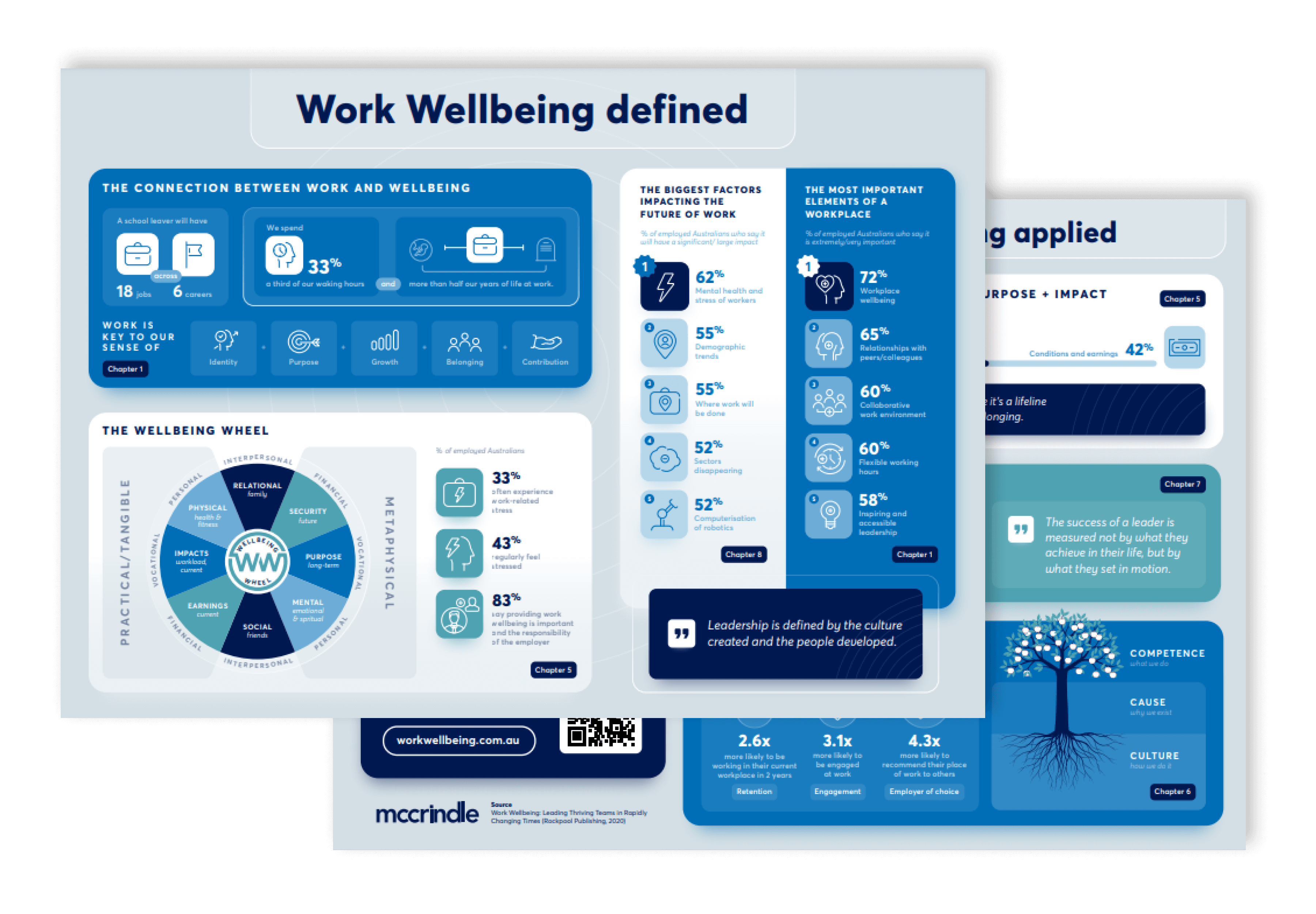
“Work Wellbeing Champion”: The workplace becomes a key space for meaningful social engagement.
A call to action
As we navigate this new normal, let us embrace the profound importance of social connections and recognise the significance of these community hubs, including the evolving role of workplaces. Together, we can forge a path towards improved mental health and well-being for all, reaffirming the indomitable human spirit in the face of adversity.
[1] https://mccrindle.com.au/article/topic/generation-alpha/the-emerging-generations-mental-health-and-wellbeing/
[2] https://www.abs.gov.au/statistics/health/mental-health/national-study-mental-health-and-wellbeing/latest-release
[3] https://www.who.int/news/item/02-03-2022-covid-19-pandemic-triggers-25-increase-in-prevalence-of-anxiety-and-depression-worldwide#:~:text=COVID%2D19%20pandemic%20triggers%2025,of%20anxiety%20and%20depression%20worldwide
[4] https://www.rootsofloneliness.com/loneliness-statistics#loneliness-worldwide
[5] https://mccrindle.com.au/article/the-power-of-place-australians-and-the-heart-of-our-communities/
[6] https://mccrindle.com.au/article/the-power-of-place-australians-and-the-heart-of-our-communities/