ARTICLE
Trends of 2027

Every year we launch our research backed trends that will impact businesses and organisations in the year ahead. In this article we provide a summary of the trends.
- Millennial midlife
- Democratised capability
- Micro-credibility
- Belonging economy
- Simplicity premium
1. Millennial midlife
Navigating career and family responsibilities, millennials look for avenues to ease the squeeze.
As millennials approach their midlife years (aged 33 to 47 in 2027), they are experiencing a profound demographic and social squeeze. Shifting into the median age of key leaders within their organisations, this is requiring them to navigate the peak demands of career leadership, while simultaneously managing family responsibilities.
Millennials are the latest cohort to become the Sandwich Generation, pressed between actively guiding their own children, while increasingly giving more care and support to their ageing parents.
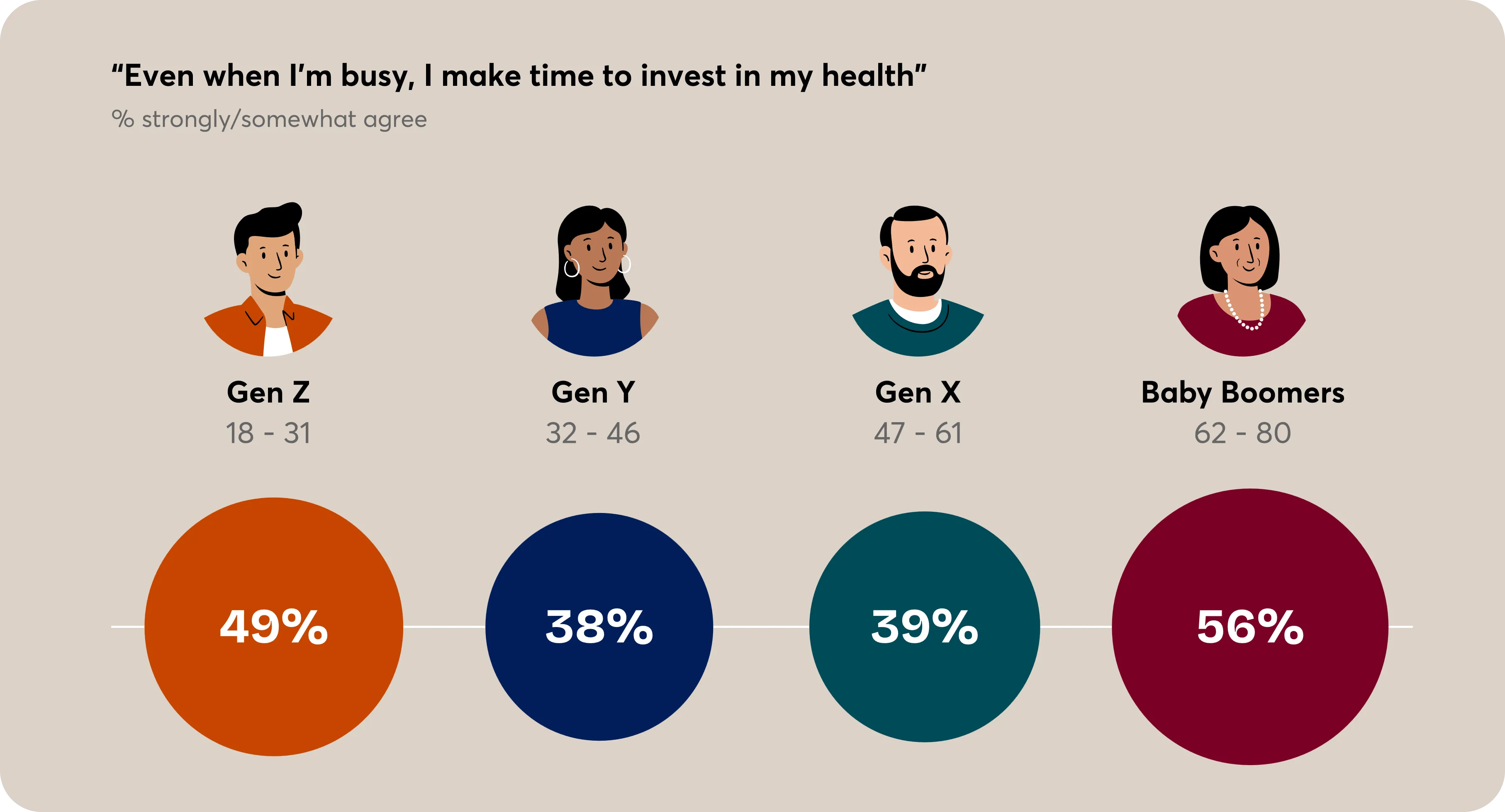
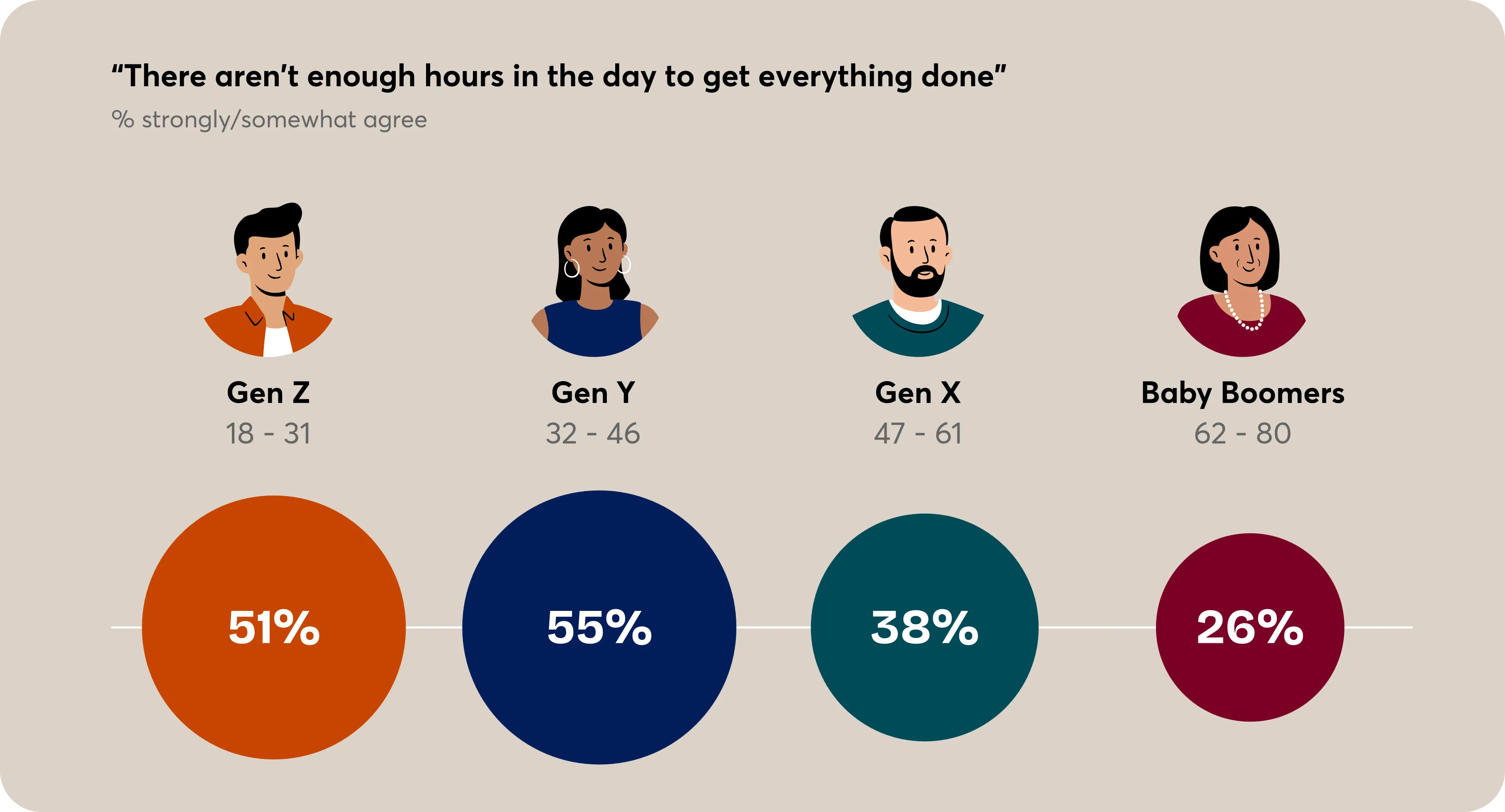
Generation Y, aka millennials, are the most likely generation to not have enough hours in the day to get everything done (55%). They are the most likely to find juggling work and family a challenge (54%). Meanwhile, it’s their health that is the first to go when feeling squeezed in other areas of life. Gen Y are the least likely to make time to invest in their health when they’re busy (38%).
2. Democratised capability
AI tools make launching a business easier, but brand differentiation harder than ever.
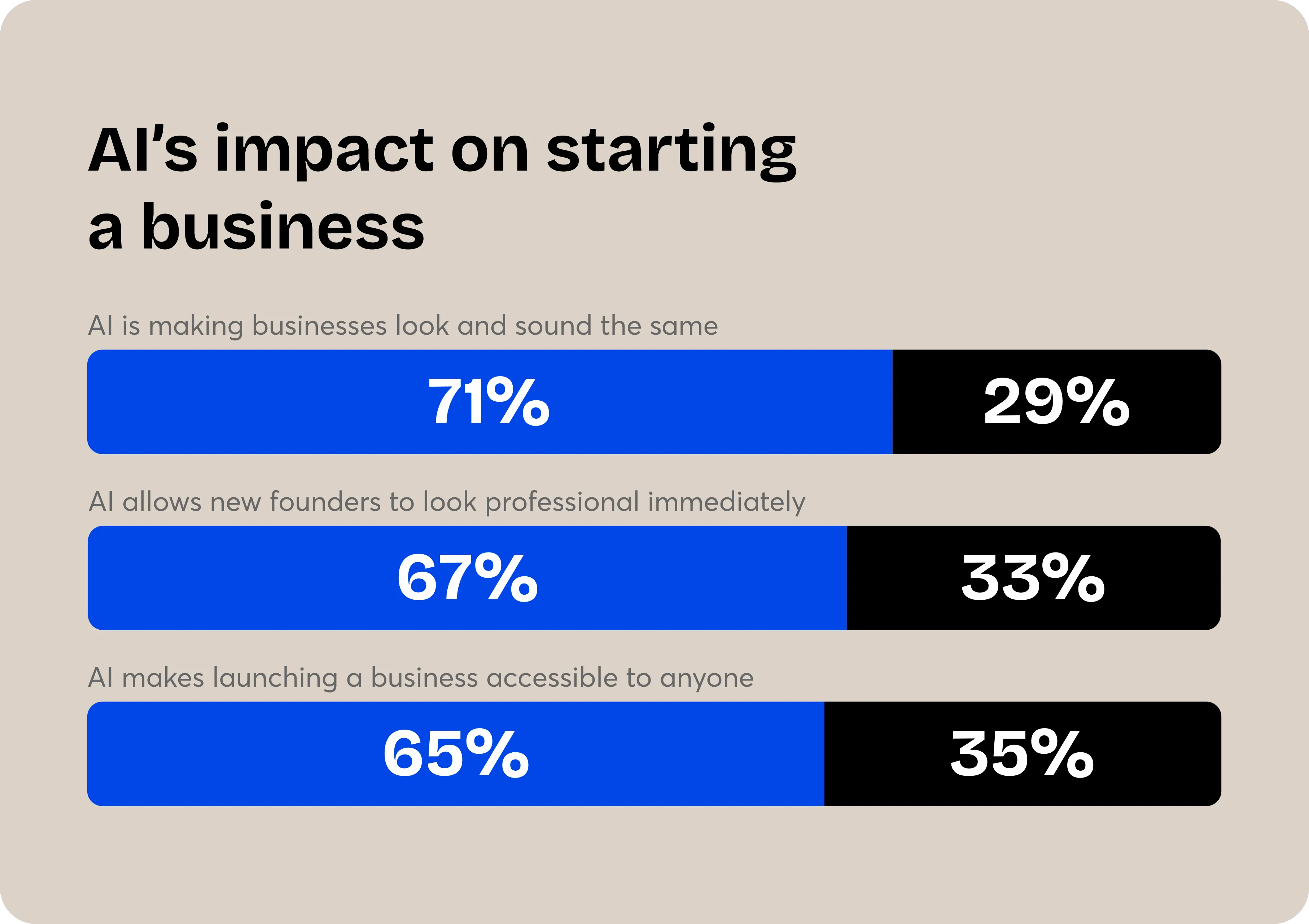
Artificial Intelligence is reshaping entrepreneurship and the workforce. It is creating business conditions where the floor is lower, but the bar to differentiate is higher. In fact, two thirds of Australians (65%) agree AI is changing the game by making launching a business accessible to anyone. It is also enabling new founders to look professional immediately (67%), further decreasing the barriers to entry for new businesses. This isn’t without its challenges, however, as seven in ten Australians (71%) believe AI is making businesses look and sound the same, highlighting the need for differentiation
AI is lowering the floor but raising the bar.
The changing environment is also putting pressure on established business, with 81% of Australians agreeing that established businesses must innovate faster to stay relevant. Although workers are paying the price, with 79% of Australians believing workers are expected to get more done in less time because of AI tools.
Leaders of established organisations must carefully manage the integration of AI to avoid squeezing their workforce. Rather than simply using AI to demand more output in less time, which can lead to burnout and employee stress, established businesses must strategically redesign their workflows.
3. Micro-credibility
In an era of distrust, brand authority is built in niche channels, rather than mass marketing.
The challenge for modern communication is getting cut through in an increasingly socially fragmented society. Low trust, particularly in federal government (38% extremely/very/high trust), large tech companies (32%) and media outlets (30%), means people are looking for trusted voices on niche channels that provide hyper-personalised community and information.
To navigate this shift towards micro-credibility, leaders need to pivot their communication strategies to focus on building authentic relationships through consistent, meaningful micro- connections with their audience.
4. Belonging economy
The search for meaningful connection is creating new, innovative, yet paid forms of community.
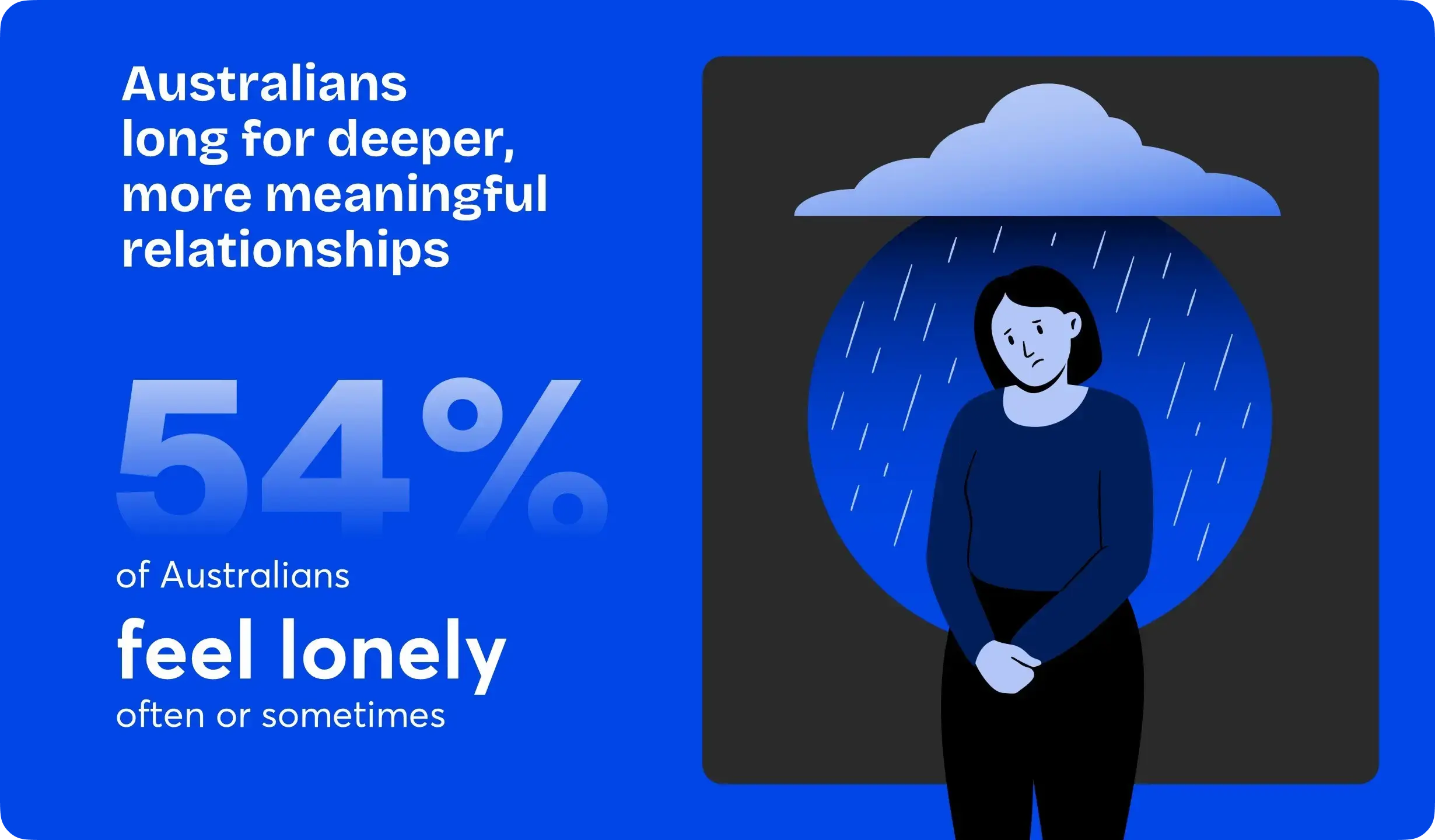
In a society that is more digitally connected yet personally isolated than ever, Australians are navigating a loneliness ’low tide’. More than half of Australians (54%) often or sometimes feel lonely, however, this rises for the younger generations.
The search for connection is reshaping where Australians find community. Meaningful and regular connection is found primarily in the household (50%), workplace (31%) and local neighbourhood (28%).
Reflecting their life stage, Gen Y most readily finds community through the workplace (42% cf. 33% Gen Z, 35% Gen X, 12% Baby Boomers). Baby Boomers, however, are much more likely to find connection through their local neighbourhood (45% cf. 24% Gen X, 26% Gen Y, 16% Gen Z)
5. Simplicity premium
Seeking presence over pace, consumers choose brands that simplify daily life.
For many Australians, the pace of modern life has not delivered the balance or freedom it once promised. Instead, constant connectivity and mounting commitments have left more than a third of Australians (37%) feeling overwhelmed by the daily grind. This growing sense of fatigue is prompting people to look for ways to regain control and personal agency over their everyday lives.
As Australians navigate daily busyness, simplicity is emerging as a compelling value proposition. Consumers are weary of unnecessary complexity and excessive noise. In response, they are gravitating towards organisations that reduce decision fatigue and bring genuine ease to their everyday routines.
Commercial advantage no longer comes from adding more features to an already crowded existence, but from removing friction.
For more on the trends of 2027 download the report here. Wondering how to apply these trends to your organisation? Book a trends of 2027 strategy workshop with a McCrindle researcher, learn more here.